Key Takeaways
- Organized books for business decisions help owners understand revenue, expenses, and cash flow clearly.
- Accurate bookkeeping reveals important financial details, allowing for timely responses to potential issues.
- Monthly review enables better visibility into business operations and supports informed decision-making.
- Essential reports like profit and loss, balance sheet, and cash flow help answer key financial questions.
- Pavlovich Bookkeeping Co. offers services to ensure business owners maintain reliable books and extract valuable insights.
Bookkeeping should do more than help you get through tax season. Clean, organized books should help you understand what happened in your business, what changed, and what needs your attention.
Many small business owners think of bookkeeping as a recordkeeping task. That matters, of course. But when you keep your books current, you also create a decision-support tool. Your reports can help you answer basic business questions before small issues become bigger problems.
The U.S. Small Business Administration connects accurate bookkeeping with stronger financial management and more informed business decisions. Its bookkeeping basics guidance explains that accurate bookkeeping forms the foundation of a business’s accounting and financial systems. (Small Business Administration)
Bookkeeping Should Help You Understand the Business
Good bookkeeping gives you a clearer picture of where your business stands. It organizes your income, expenses, assets, liabilities, and equity so you can review the business with facts instead of guesses.
Without organized books, many owners rely on bank balances alone. That can create confusion. A bank balance tells you how much cash sits in the account today, but it does not explain unpaid invoices, upcoming bills, loan payments, tax obligations, or whether the business actually made a profit.
Organized books give you more context. They help you see what came in, what went out, what changed, and what still needs follow-up.
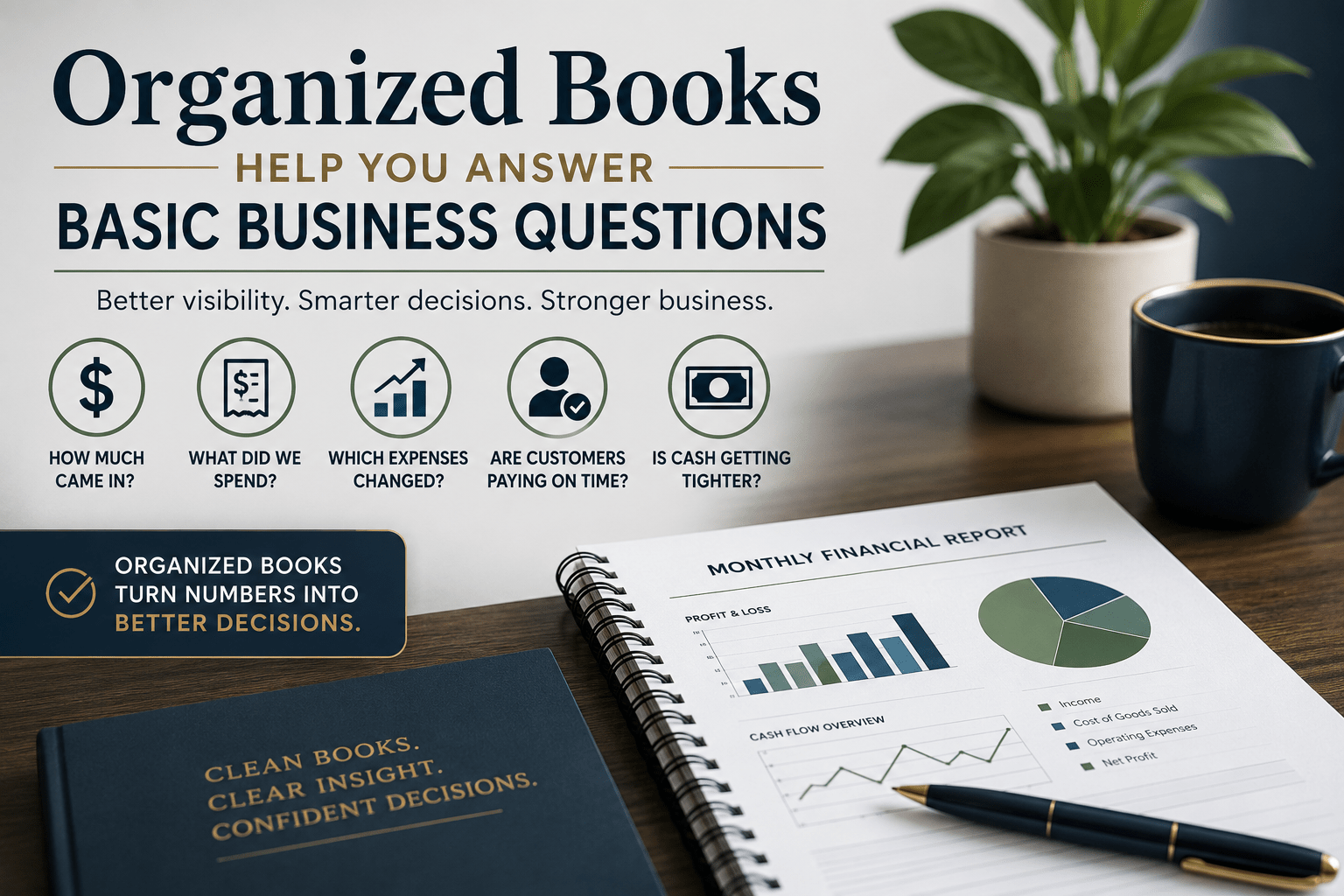
How Much Money Came In?
One of the first questions your books should answer is simple: how much money came into the business?
Revenue may come from customer invoices, online payments, cash sales, deposits, retainers, or merchant processors. If you only look at bank deposits, you may miss important details. For example, a deposit from a payment processor may already have fees removed. A customer payment may apply to an old invoice. A transfer from savings may look like income if no one categorizes it correctly.
Clean bookkeeping separates true business income from transfers, refunds, owner contributions, and other activity. That makes your revenue numbers more reliable.
What Did the Business Spend?
Your books should also show where money went. This includes rent, software, payroll, subcontractors, supplies, insurance, equipment, merchant fees, loan payments, and other operating costs.
Accurate expense categorization helps you understand what the business needs to operate. It also helps your CPA or tax preparer review the right information at tax time. Bookkeeping does not replace tax advice, but clean books make the records easier to review and share.
The SBA’s financial management guidance encourages business owners to understand revenue, expenses, cash flow, and financial records as part of managing the business. (Small Business Administration)
Which Expenses Changed?
Monthly bookkeeping helps you spot changes. A single month may not tell the full story, but a pattern over several months can reveal useful information.
For example, your software costs may slowly increase because of subscriptions you no longer use. Merchant fees may rise as card payments increase. Vehicle expenses may jump during a busy season. Insurance, rent, subcontractor costs, or materials may change in ways that affect profit.
When you review expenses monthly, you can ask better questions:
Did this cost increase because sales increased?
Did a vendor raise prices?
Did we add a new tool, subscription, or service?
Did someone categorize transactions incorrectly?
You do not need complicated analysis to benefit from monthly reporting. You need consistent records and a regular review process.
Are Customers Paying on Time?
If your business sends invoices, organized books can help you see whether customers pay on time. This matters because sales do not always equal cash in the bank.
An accounts receivable report can show unpaid invoices, overdue balances, and customers who need follow-up. Without that visibility, a business may look profitable on paper while cash feels tight.
This question matters for service businesses, contractors, consultants, and other businesses that invoice after work begins or after a project ends. If customers pay late, the business still has to cover payroll, supplies, subcontractors, and other expenses while waiting for cash to arrive.
Is Cash Getting Tighter?
Cash flow tells a different story than profit. A business can show profit and still feel short on cash if customers pay slowly, debt payments are high, inventory costs increase, or the owner takes large draws.
Organized bookkeeping helps you see the pieces that affect cash. You can review income, expenses, accounts receivable, accounts payable, loan balances, owner draws, and transfers between accounts.
The SBA includes cash flow analysis as part of financial management and notes that business owners should understand how money moves through the business. (Small Business Administration)
When your books stay current, you can look for early warning signs. You may notice lower deposits, higher expenses, slower customer payments, or more frequent transfers from savings. Those details can help you plan instead of react.
Which Reports Help Answer These Questions?
Several basic reports can help small business owners understand their numbers.
A profit and loss statement shows income, expenses, and profit or loss over a period of time. This report helps answer: How much money came in? What did we spend? Did the business make a profit?
A balance sheet shows assets, liabilities, and equity. The SBA notes that a balance sheet helps business owners track items such as assets, liabilities, and equity. (Small Business Administration)
An accounts receivable report shows unpaid customer invoices. This helps answer: Who still owes the business money?
An accounts payable report shows unpaid bills. This helps answer: What does the business still need to pay?
A cash flow report helps show how money moved in and out of the business. This helps answer: Is cash getting tighter, and why?
A general ledger or transaction detail report helps review specific transactions when something looks unclear.
These reports work best when the bookkeeping behind them stays accurate. If accounts have not been reconciled, categories contain errors, or old transactions remain unclear, reports can mislead the owner.
Why Monthly Review Creates Better Visibility
Monthly review gives business owners a regular rhythm. Instead of waiting until year-end, you can review your numbers while the information still feels current.
A monthly bookkeeping process may include categorizing transactions, reconciling bank and credit card accounts, reviewing unclear items, checking reports, and identifying anything that needs the owner’s input. This routine helps keep the books clean and makes financial reports easier to trust.
Monthly review also reduces the stress of trying to reconstruct old information. It is much easier to answer a question about last week’s purchase than a transaction from nine months ago.
Organized Books Give You Better Questions
Clean books do not make every business decision simple, but they help you ask better questions. Instead of wondering why the bank balance feels low, you can review reports and look for the reason. Instead of guessing whether expenses increased, you can compare months. Instead of waiting for your CPA or tax preparer to find missing information, you can keep records organized throughout the year.
Bookkeeping should support the way you run the business. Tax-time preparation matters, but monthly visibility matters too.
Pavlovich Bookkeeping Co. helps small business owners keep accurate, organized, and reliable books through monthly bookkeeping, catch-up bookkeeping, QuickBooks setup, and clear financial reporting. To get your books organized and understand what your numbers are telling you, schedule a consultation.