Key Takeaways
- Current bookkeeping is crucial for effective estimated tax planning, as tax professionals rely on accurate, up-to-date financial information.
- Monthly bookkeeping helps identify changes in income, expenses, and cash flow, allowing better conversations with CPAs or tax preparers.
- Reconciled books prevent errors that could mislead tax professionals, enabling them to provide better guidance on estimated taxes.
- Business owners should share updated financial reports regularly instead of just at tax time to ensure timely and accurate advice.
- Monthly bookkeeping does not replace tax advice but rather supports your discussions with CPAs, making tax planning more straightforward.
Estimated tax conversations go more smoothly when your books tell a current story.
Many small business owners ask their CPA or tax preparer about estimated taxes during the year, but the quality of that conversation depends heavily on the numbers available. A tax professional can give better guidance when they can review current income, expenses, profit, and cash flow instead of relying only on last year’s return or a rough guess.
The IRS explains that taxpayers need expected adjusted gross income, taxable income, taxes, deductions, and credits for the year to figure estimated tax. (IRS) That makes current bookkeeping especially important. If your books lag several months behind, your tax professional may not have enough current information to help you plan well.
Why Estimated Tax Planning Gets Harder When Books Fall Behind
Estimated tax planning depends on what your business actually earns during the year. When your books fall behind, several problems can happen at once.
You may not know how much income your business has brought in. You may not know whether your expenses have increased. You may not know if profit looks higher or lower than last year. You may also miss changes in cash flow that affect how comfortably you can make upcoming payments.
A CPA or tax preparer can still use prior-year information as a starting point, but that does not always reflect the current year. A growing business, slower sales season, new contractor payments, larger equipment purchases, higher software costs, or a change in pricing can all shift the picture.
The IRS lists estimated taxes as part of the pay-as-you-go system for federal income tax and explains that taxpayers pay as they earn or receive income during the year. (IRS) That pay-as-you-go structure works best when business owners and tax professionals can look at numbers that reflect the current year.
What Monthly Reports Can Show
Monthly bookkeeping gives your CPA or tax preparer more useful information because it organizes the details behind your business activity.
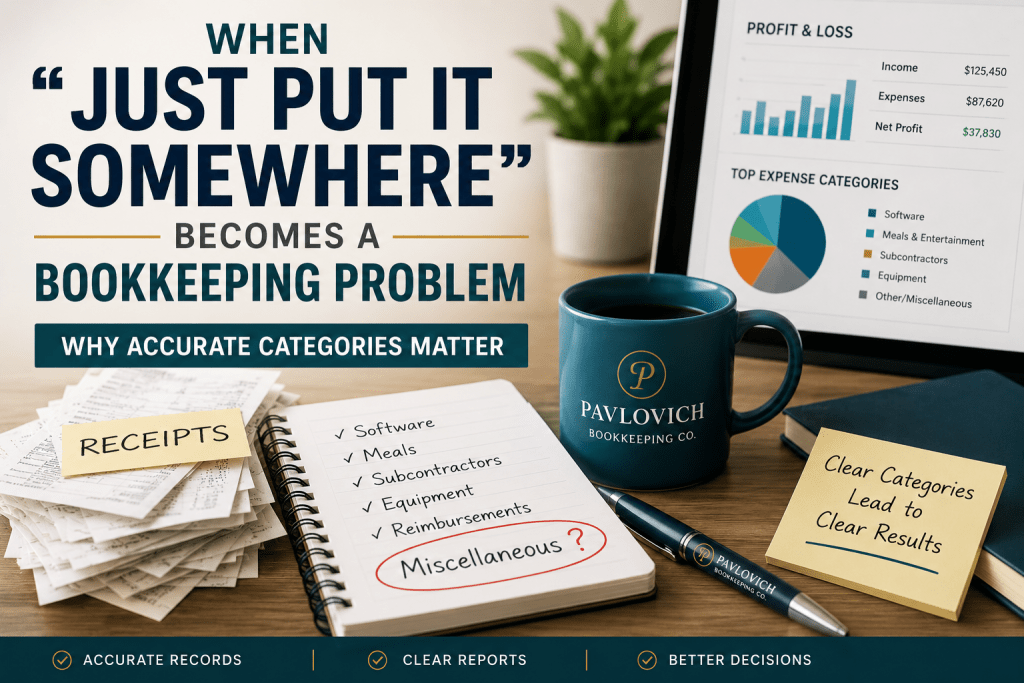
A current profit and loss report can show revenue, expenses, and net profit for the year so far. This helps your tax professional see whether your business appears to be earning more or less than expected.
A balance sheet can show accounts, loans, credit cards, owner contributions, owner draws, and other financial activity that may need review. Clean monthly records can also help separate business activity from transfers, reimbursements, or personal expenses that do not belong in operating expenses.
Cash flow reports can add another layer of context. Profit and cash flow do not always move together. A business may show a profit while cash feels tight because of loan payments, owner draws, inventory, delayed customer payments, or large purchases. Monthly reporting helps your CPA or tax preparer understand not only what the business earned, but also what changed.
Current Numbers Beat Last Year’s Guesswork
Last year’s tax return can help start a tax planning conversation, but it cannot fully explain what has happened this year.
For example, last year’s numbers may not reflect:
- A new service line
- A major client gain or loss
- Higher subcontractor costs
- New software subscriptions
- A change in payroll
- More owner draws
- A slower sales quarter
- A large deductible purchase that needs tax review
When your books stay current, your CPA or tax preparer can compare this year’s numbers to last year’s and ask better questions. They can identify whether your estimated payments may need review. They can also help you understand what information they need before giving tax guidance.
Monthly bookkeeping does not replace tax planning. It gives your tax professional a cleaner starting point.
Reconciled Books Help Identify Changes During the Year
Bank feeds alone do not give the full picture. Transactions may download into QuickBooks, but that does not mean the books are accurate.
Monthly reconciliation checks your records against bank, credit card, and loan statements. This process helps catch missing transactions, duplicated entries, incorrect categories, uncleared items, and balance problems.
That matters for estimated tax conversations because small errors can affect the totals your tax professional reviews. If income looks lower because deposits did not post correctly, or expenses look higher because transfers were miscategorized, the conversation may start from the wrong place.
Reconciled books help create a more reliable picture. They also make it easier to notice meaningful changes during the year, such as a jump in revenue, a rise in contractor payments, or a growing balance on a business credit card.
What Bookkeepers Provide vs. What CPAs or Tax Preparers Advise
A bookkeeper and a CPA or tax preparer play different roles.
A bookkeeper helps organize the financial records. This often includes categorizing transactions, reconciling accounts, cleaning up records, maintaining QuickBooks, and preparing monthly financial reports. Pavlovich Bookkeeping Co. provides monthly bookkeeping, catch-up bookkeeping, QuickBooks setup and support, and financial review and reporting for small businesses.
A CPA or tax preparer provides tax guidance. They can review your reports, consider your tax situation, explain estimated tax requirements, and advise you on payment amounts or planning strategies.
The two roles work well together. Clean books give your tax professional better information. Tax guidance helps you understand what actions to take based on that information.
When to Share Updated Reports With a Tax Professional
Many small business owners only send reports to their CPA or tax preparer at tax time. That may work for annual filing, but estimated tax conversations often need more frequent updates.
Consider sharing updated reports before each estimated tax deadline, after a major business change, or when profit looks noticeably different from last year. You may also want to send reports when you hire employees, add contractors, buy equipment, take on debt, increase owner draws, or see a large change in revenue.
Your CPA or tax preparer can tell you how often they want to review your information. The key is to avoid waiting until the year ends to discuss a year that has already changed.
Monthly Bookkeeping Makes the Conversation Easier
Estimated tax planning can feel confusing, especially when business income changes from month to month. Current books help reduce that confusion.
When your records stay organized, you can have a more productive conversation with your CPA or tax preparer. You can provide current reports. You can answer questions with more confidence. You can spot changes earlier. You can avoid relying only on memory, bank balances, or last year’s numbers.
Monthly bookkeeping does not decide your tax payments. Your CPA or tax preparer should provide that advice. But clean, reconciled, current books make their job easier and help you walk into the conversation better prepared.
If your books are behind or your reports do not feel reliable, getting organized now can make future tax conversations much easier. Schedule a consultation with Pavlovich Bookkeeping Co. to talk through monthly bookkeeping, catch-up bookkeeping, or QuickBooks support so your records stay current throughout the year.