Key Takeaways
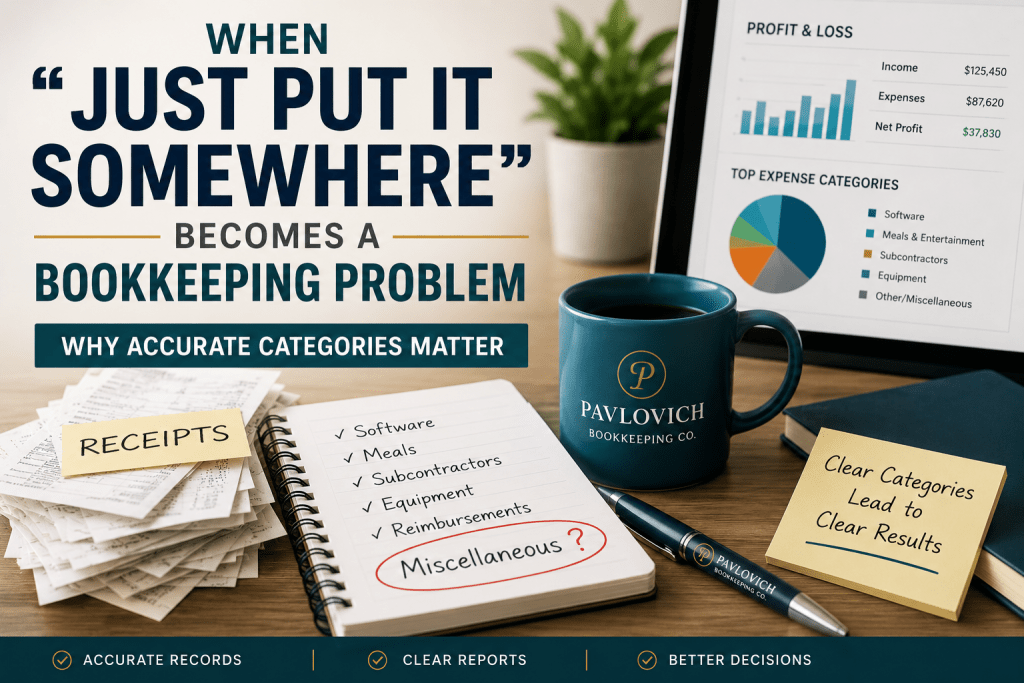
- Business owners often mistakenly categorize all Staples purchases as Office Supplies, which can blur financial reports.
- A bookkeeper reviews each item on a receipt, categorizing them accurately into groups like Office Equipment and Printer Supplies.
- Clear categorization helps show where money goes, improving financial clarity for business owners.
- Different items may need varied treatment for tax purposes, so precise categorization is essential for CPA reviews.
- Consistent, organized categories allow better tracking of costs and help answer important financial questions.
A Staples receipt may look simple at first glance. But before you categorize office purchases, keep in mind that the store name says “office supplies,” so many business owners post the entire transaction to Office Supplies and move on.
That shortcut can make the books less useful.
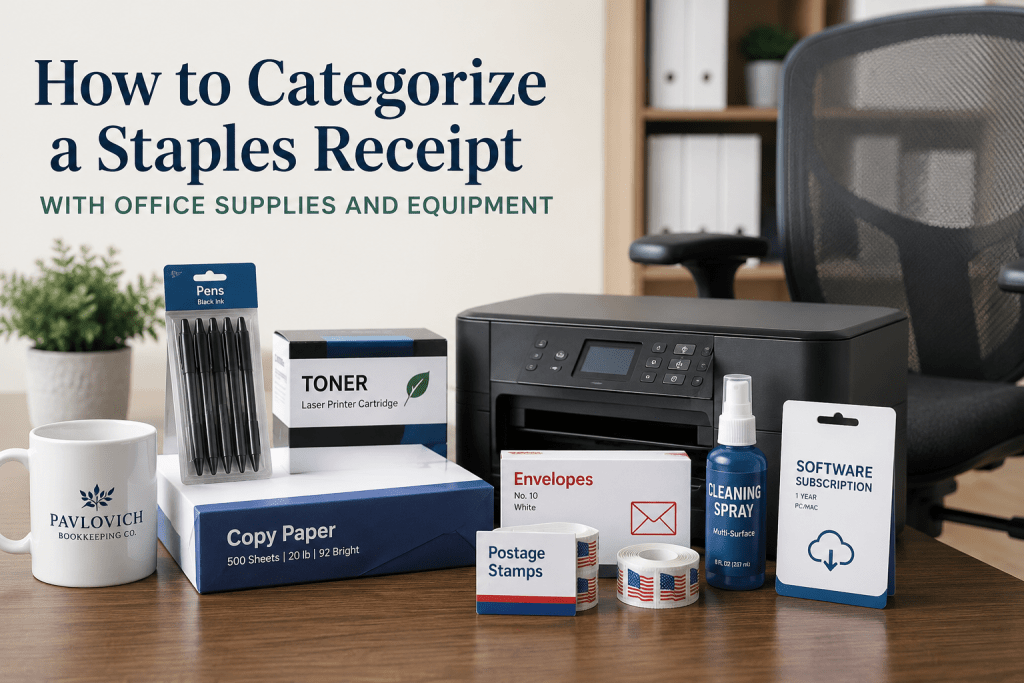
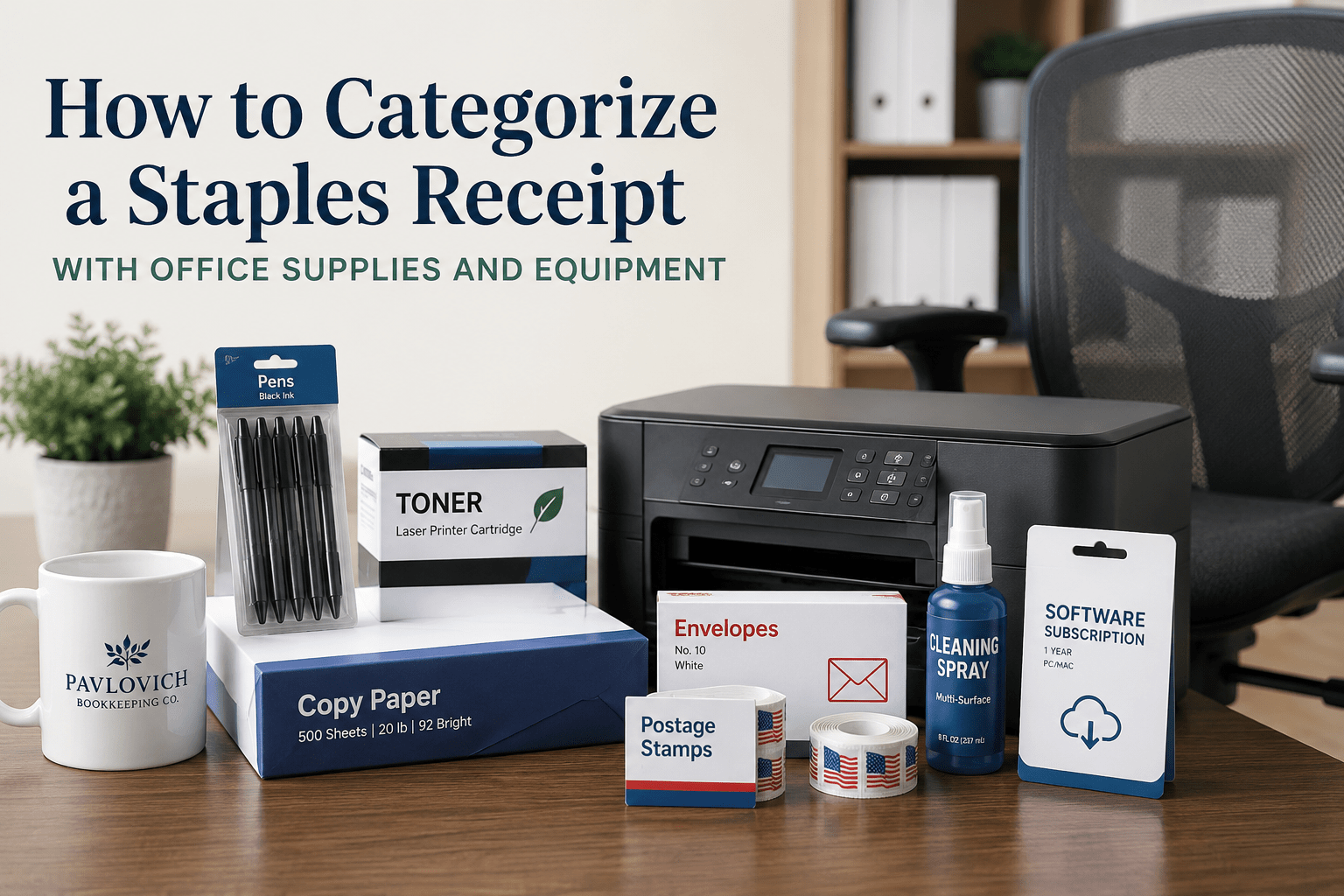
One office purchase can include routine supplies, printer supplies, equipment, furniture, postage-related supplies, cleaning supplies, and software. A bookkeeper looks beyond the vendor name and reviews what the business actually bought.
The Receipt
Here is a fictional Staples receipt:
| Item | Example Cost | Better Bookkeeping Category |
|---|---|---|
| Copy paper | $39.99 | Office Supplies |
| Pens | $12.49 | Office Supplies |
| Toner cartridge | $89.99 | Printer Supplies or Office Supplies |
| Printer | $349.99 | Office Equipment |
| Desk chair | $229.99 | Office Furniture or Office Equipment |
| Envelopes | $18.99 | Office Supplies |
| Postage supplies | $24.99 | Postage and Mailing |
| Cleaning spray | $8.99 | Cleaning Supplies |
| Software subscription card | $120.00 | Software or Subscriptions |
The total receipt may come from one store, one checkout, and one bank transaction. But the purchase contains several different types of business costs.
The Common Mistake: Everything Goes to Office Supplies
Many small business owners categorize the full receipt as Office Supplies because Staples sells office supplies.
That may seem reasonable, but it blurs the reports.
Copy paper, pens, and envelopes usually fit the office supplies category. But a printer, desk chair, toner, cleaning spray, postage supplies, and software card tell a different story. Each item helps the business in a different way.
The IRS says business records should clearly show income and expenses, and supporting documents such as receipts and paid bills help support entries in the books and on the tax return. (IRS) When one receipt includes several types of purchases, the receipt itself gives the details needed for better categorization.
How a Bookkeeper Would Review It
A bookkeeper would not rely only on the vendor name. Instead, they would read the receipt line by line and separate the purchase by item type.
Office supplies would usually include copy paper, pens, and envelopes. These are routine consumable items the business uses in normal operations.
Printer supplies may include toner or ink. Some businesses keep toner under office supplies, while others use a separate printer supplies category if printing costs matter.
Office equipment would include the printer. A printer lasts beyond one purchase cycle and may need CPA review depending on the business’s capitalization policy and tax treatment.
Office furniture would include the desk chair. Furniture often deserves separate tracking because it may represent a longer-term business asset instead of a routine supply.
Postage and mailing would include postage-related supplies. If the business mails invoices, contracts, products, documents, or client materials, this category helps the owner see mailing costs clearly.
Cleaning supplies would include cleaning spray. These items support the workspace, but they do not belong with paper and pens.
Software or subscriptions would include the software subscription card. If the card covers a monthly or annual software plan, the bookkeeper may post it to software, subscriptions, dues, or a similar category based on the chart of accounts.
This level of detail does not need to make the books complicated. It simply keeps larger purchases and routine supplies from blending together.
Why the CPA May Care
The CPA or tax preparer may care because not every office purchase receives the same review.
The IRS explains that ordinary and necessary business expenses generally must be common, accepted, helpful, and appropriate for the business. (IRS) Routine consumable supplies often differ from items that last longer than one year.
For example, IRS Publication 946 explains that businesses can depreciate many types of tangible property, including furniture and equipment, and certain intangible property, including computer software, when the property meets the requirements for depreciation. (IRS) That does not mean every printer, chair, or software purchase automatically needs depreciation treatment, but it does mean those items may deserve a different review than pens and copy paper.
The IRS tangible property rules also include a de minimis safe harbor election that may allow qualifying businesses to deduct certain lower-cost tangible property purchases if they follow the rule requirements and apply the treatment properly in their books and records. (IRS) A bookkeeper should not make tax elections for the business owner, but clean categorization can help the CPA see which purchases need review.
That distinction matters. A $12 pack of pens and a $900 office printer should not disappear into the same broad office supplies bucket without any context.
Why the Owner Should Care
Better categorization gives the business owner clearer financial reports.
The Small Business Administration notes that financial statements help business owners track costs such as supplies, assets, liabilities, and equity. (Small Business Administration) When the books separate routine supplies from larger office purchases, the owner can see where money actually went.
For example, a high office supplies total may not mean the business suddenly used more paper and pens. It may mean the business bought a new printer, replaced furniture, stocked postage supplies, and renewed software in the same month.
Those details help answer better questions:
Did routine office supply spending increase?
Did we buy equipment this month?
Are software subscriptions growing?
Are mailing costs becoming more significant?
Did we make a larger office purchase that the CPA should review?
Good bookkeeping turns a receipt into useful information.
A Practical Way to Handle This Receipt
For this fictional Staples receipt, a practical split might look like this:
| Category | Items |
|---|---|
| Office Supplies | Copy paper, pens, envelopes |
| Printer Supplies | Toner |
| Office Equipment | Printer |
| Office Furniture | Desk chair |
| Postage and Mailing | Postage supplies |
| Cleaning Supplies | Cleaning spray |
| Software and Subscriptions | Software subscription card |
The exact account names may vary by business. The important point is consistency. A simple, well-organized chart of accounts helps the owner, bookkeeper, and CPA understand the same financial story.
Clean Categories Make Office Purchases Easier to Understand
A Staples receipt does not always belong in one category.
Some items help with daily office work. Some support printing and mailing. Some keep the workspace clean. Some may represent equipment, furniture, or software that deserves a closer look.
When a bookkeeper reviews the receipt carefully, the books show more than “money spent at Staples.” They show what the business actually bought.
Pavlovich Bookkeeping Co. helps small business owners keep accurate, organized records through monthly bookkeeping, catch-up bookkeeping, QuickBooks setup, and clear financial reporting. To get your books organized, request a consultation here: https://pavlovichbookkeeping.com/#CONSULTATION_FORM