Good bookkeeping gives your CPA or tax preparer better information to review. This article explains how organized transactions, receipts, reconciled accounts, vendor records, customer payments, and monthly reports help create tax-ready books without replacing professional tax advice.
Tax-Ready Bookkeeping
Guidance on keeping books organized so tax-time preparation feels less stressful. Learn how clean records, reconciled accounts, receipts, reports, and consistent bookkeeping can help your CPA or tax preparer work from clearer information.
How Clean Books Help at Tax Time
Tax season is easier when your bookkeeping records are already organized. Learn what tax-ready books include, what your CPA or tax preparer may need, and why monthly bookkeeping can reduce year-end stress.
How Clean Books Help at Tax Time
Tax season is less stressful when your records are already organized. Learn how clean books, reconciled accounts, and clear reports help your CPA or tax preparer work from reliable financial information.
What Your Monthly Financial Reports Are Telling You
Monthly financial reports do more than show numbers. They help small business owners understand income, expenses, profit, cash flow, and what may need attention. Learn which reports to review each month and how clear bookkeeping can support better business decisions.
What “Tax-Ready Books” Really Mean for a Small Business
Tax-ready books do not mean your bookkeeper has prepared your tax return. They mean your income, expenses, accounts, and supporting records are organized clearly enough for your CPA or tax preparer to use. Learn what tax-ready books include, what common issues create tax-time stress, and how monthly or catch-up bookkeeping can help small business owners get organized before tax season.
The Year-End Bookkeeping Checklist Your Tax Preparer Will Appreciate
A practical year-end bookkeeping checklist can help small business owners review accounts, clean up uncategorized transactions, organize documents, and prepare reports before sending books to a CPA or tax preparer. Clean records, reconciled accounts, and clear financial reports can make tax season easier and reduce unnecessary back-and-forth.
Why Reconciled Accounts Matter Before You Send Books to Your CPA
Bank feeds can help pull transactions into QuickBooks, but they do not prove your books are complete or accurate. Reconciled accounts compare your bookkeeping records to bank and credit card statements, helping catch duplicates, missing expenses, incorrect balances, and other issues before your CPA or tax preparer reviews your books.
Contractor Payments, W-9s, and 1099s: Bookkeeping Records to Keep Organized
Contractor payment records can create tax-time stress when W-9s, vendor names, invoices, and payment details stay scattered. Learn why small businesses should organize contractor records throughout the year, how bookkeeping can help track payments by vendor, and what to review before sending information to a CPA or tax preparer.
Income Tracking Mistakes That Create Problems at Tax Time
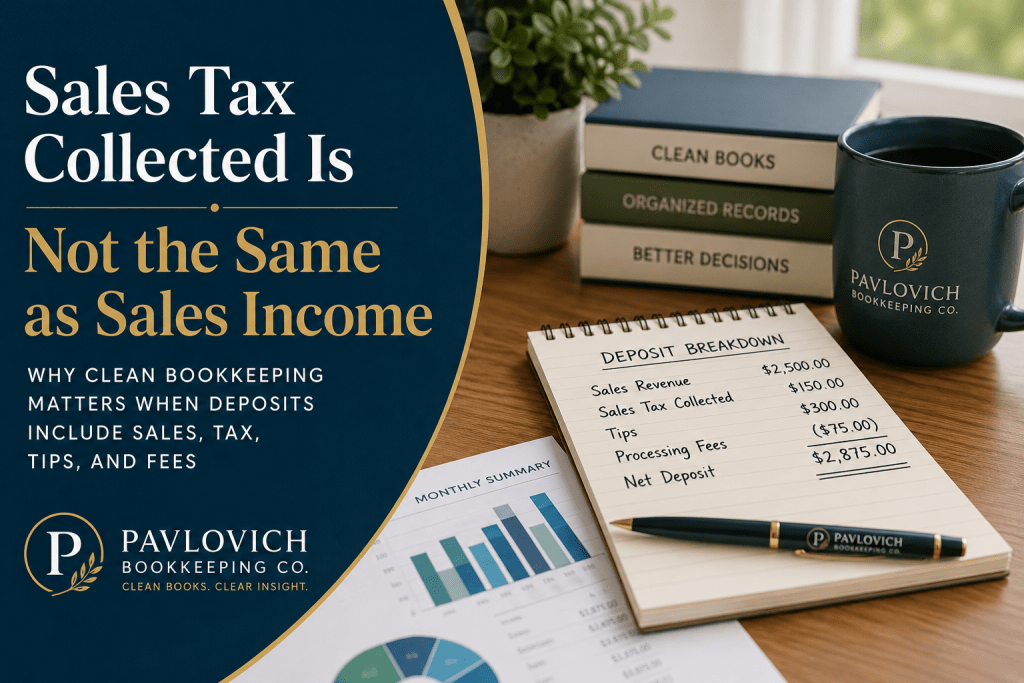
Bank deposits do not always equal business income. Merchant processor fees, refunds, chargebacks, transfers, loan proceeds, owner contributions, and 1099-K forms can all create confusion in the books. Learn how organized bookkeeping helps small business owners track income more clearly and gives their CPA or tax preparer better information before tax time.
What Expense Records Should Small Business Owners Keep for Tax Time?
Small business owners need more than bank transactions to support their expenses at tax time. Receipts, invoices, statements, mileage logs, asset records, and notes about business purpose help create clean books, reduce confusion, and give your CPA or tax preparer better information. A simple monthly recordkeeping habit can make tax season much easier.
How Monthly Bookkeeping Makes Estimated Tax Conversations Easier
Estimated tax conversations are easier when your books stay current. Monthly bookkeeping gives your CPA or tax preparer updated income, expense, profit, and cash flow reports so they can review the current year instead of relying only on last year’s numbers or rough estimates.