
Key Takeaways
- Organized bookkeeping is essential for providing clear financial information to your CPA.
- Business owners need more than just a bank balance to understand their financial situation.
- Good recordkeeping supports accurate reports, making tax preparation smoother and more efficient.
- Regular bookkeeping helps maintain current records and prepares businesses for tax time.
- Effective bookkeeping and accounting support foster better communication with your CPA.
Tax preparation starts long before someone prepares a tax return. Many business owners ask, “How do I get my CPA clean books?” The quality of the information your CPA or tax professional receives depends heavily on the records your business maintains throughout the year.
A bank balance alone cannot explain what happened in your business. Your financial records need to show where money came from, where it went, what you own, what you owe, and how different transactions affect your financial reports.
That is where organized bookkeeping and accounting support matter.
When your books include clear categories, reconciled accounts, supporting documents, properly recorded owner activity, and useful financial reports, your CPA receives a much better starting point. More importantly, you also gain clearer information for running your business throughout the year.
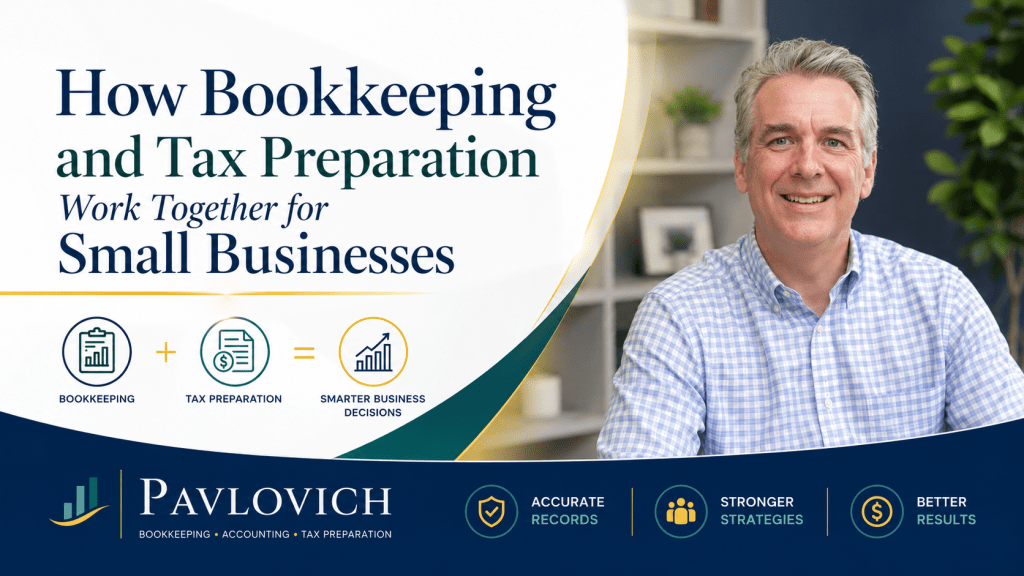
Good bookkeeping does not replace your CPA. Instead, it creates the organized financial foundation that helps you, your bookkeeper, your tax preparer, and your CPA work with better information.
Your CPA Needs More Than a Bank Balance
Checking your bank account can tell you how much cash is available today. However, the balance does not explain the full financial position of your business.
For example, your bank account does not automatically tell you:
- Whether a deposit represents sales, a loan, an owner contribution, or a transfer.
- Whether a payment went toward an expense, an asset purchase, a loan balance, or an owner withdrawal.
- How much customers still owe you.
- Which bills remain unpaid.
- Whether credit card activity has been fully recorded and reconciled.
- How much of your revenue actually became profit.
- Whether your financial reports accurately reflect the business.
The IRS explains that a business recordkeeping system should clearly show income and expenses and include a summary of business transactions in the company’s books. Supporting records also help establish the income, deductions, and other items reported on a tax return. (IRS)
Organized bookkeeping turns daily financial activity into information someone can actually review and understand.
Without that organization, your CPA may receive bank statements, credit card statements, receipts, spreadsheets, and QuickBooks reports that do not tell one consistent story. Someone then has to determine what happened before meaningful tax or accounting work can begin.
Bookkeeping Creates the Foundation for Better Accounting Information
Bookkeeping often gets described as recording transactions. That description is technically useful, but it does not explain the real value of organized books.
The purpose of bookkeeping is to create reliable financial information.
Day-to-day activity needs to flow into an organized accounting system. Bank and credit card accounts need reconciliation. Transactions need enough detail to make the reports useful. Loans, transfers, owner activity, customer payments, vendor bills, and other financial events need appropriate treatment in the books.
Once that foundation is in place, financial reporting becomes more meaningful.
The accounting profession includes work such as bookkeeping and preparing financial statements, including income statements, balance sheets, and cash flow statements. (AICPA CIMA) For a small business owner, those reports become much more useful when the underlying records are current and organized.
Accurate books support better reports. Better reports give everyone involved with the business better information.
Your Bookkeeper, Accounting Support Provider, and CPA May Have Different Roles
Small business owners sometimes assume one financial professional should handle every part of the process. In practice, different professionals may focus on different areas.
A bookkeeping and accounting provider may help maintain the financial records, reconcile accounts, organize transaction details, review financial reports, and help the business owner understand what the numbers show.
Depending on the engagement, a CPA may provide tax advice, complex accounting guidance, tax preparation, audit or assurance services, or other specialized professional services. CPA licensure also carries responsibilities and authorities that extend beyond routine bookkeeping. (AICPA CIMA)
The strongest arrangement is often collaborative.
Your ongoing bookkeeping and accounting process keeps the records organized. Financial reporting helps you understand the business during the year. Then, when your CPA needs information for tax work or another specialized matter, you can provide records that already have structure and context.
Pavlovich Bookkeeping & Accounting is not a CPA firm. We provide bookkeeping, accounting support, financial reporting, tax preparation for qualifying situations, QuickBooks support, and tax-ready financial records. When a client needs CPA services, an audit, specialized tax guidance, or another service outside our scope, organized books help that professional begin with better information.
Clear Transaction Details Give Your CPA More Context
A transaction amount rarely tells the entire story.
Imagine that a contractor spends $1,200 at a home improvement store. The credit card statement shows the date, merchant, and total. However, the purchase might include:
- Materials for a customer project.
- A new power tool.
- Safety equipment.
- Cleaning supplies.
- Office items.
- Personal purchases.
- Sales tax.
- Shipping or delivery charges.
Entering the entire amount into one broad category may allow the account to reconcile, but reconciliation alone does not make the financial information useful.
The details behind the purchase matter.
A well-organized bookkeeping process preserves enough information to help explain what the business bought and why. That does not mean the bookkeeper makes every tax determination. Some items may need review by a tax professional based on the business and the surrounding facts.
Better records simply give that professional a clearer picture.
The same principle applies to deposits. A $5,000 deposit might represent customer revenue, proceeds from a loan, an owner contribution, a refund, a transfer between accounts, or several transactions combined into one bank deposit.
Without context, the amount can easily tell the wrong story.
Supporting Documents Help Explain the Numbers
Accounting software can organize transactions, but software does not always explain what happened.
Receipts, invoices, bills, loan statements, payroll records, merchant processor reports, and other documents add important context to the financial activity in your books. The IRS notes that business transactions generate supporting documents containing information needed to record those transactions, and businesses must retain records that support items reported on tax returns. (IRS)
Consider a few common examples.
A bank feed shows that your business paid a vendor. The invoice explains what the vendor provided.
A credit card statement shows a purchase. The receipt identifies the items purchased.
A loan payment appears as one withdrawal from the bank. The loan statement may separate principal from interest.
A payment processor deposits $4,700 into the bank. The processor report may show $5,000 in customer payments, less refunds and processing fees.
Without the supporting information, your books may contain the correct bank activity while still missing important details.
Organized documents also help you answer questions during the year. Instead of searching through months of emails when someone asks about a purchase, payment, or deposit, you have a clearer record of what happened.
Reconciled Accounts Make Financial Reports More Dependable
Reconciliation means comparing the activity recorded in your books with the activity reported by the bank, credit card company, or other financial institution.
This process helps identify missing transactions, duplicate entries, incorrect balances, and other differences.
Suppose your Profit & Loss Statement shows expenses for a credit card that has not been reconciled in six months. You may not know whether every purchase appears in the books. Duplicate transactions could also remain unnoticed.
That uncertainty affects more than the account balance.
If the underlying activity is incomplete or duplicated, the financial reports may also contain inaccurate information. Your CPA may then need to ask additional questions before relying on those reports.
Regular reconciliation creates a stronger foundation for financial reporting and tax preparation.
Monthly Bookkeeping Builds Tax-Ready Records Over Time
Tax-ready books do not suddenly appear at year-end.
They develop through a consistent monthly process.
Each month gives the business an opportunity to:
- Review financial activity.
- Reconcile bank and credit card accounts.
- Clarify unusual transactions.
- Organize supporting documents.
- Review owner draws and contributions.
- Check loans and transfers.
- Address uncategorized items.
- Review financial reports.
- Correct problems while the details remain easier to remember.
Waiting until tax season changes the process.
A transaction that seemed obvious in May may be difficult to explain the following February. Missing receipts become harder to locate. Questions accumulate. Several months of small bookkeeping problems can turn into a much larger cleanup project.
Monthly bookkeeping spreads that work throughout the year and helps keep the financial information current.
More importantly, the process gives you information you can use before tax season.
Financial Reporting Helps You Understand What Your CPA Will Eventually See
Tax preparation may create the deadline, but financial reporting creates value throughout the year.
A Profit & Loss Statement can help you understand revenue, expenses, and profitability over a period of time.
A Balance Sheet shows what the business owns, what it owes, and the equity position at a specific point in time. (Small Business Administration)
Cash flow information helps explain how money moves through the business.
These reports answer different questions. Together, they can give you a clearer picture of where your business stands.
The U.S. Small Business Administration emphasizes financial literacy and bookkeeping as important parts of keeping business finances in order. (Small Business Administration)
However, simply generating reports from accounting software does not guarantee that the reports are useful.
The quality of a financial report depends on the information behind it.
When transactions have clear categories, accounts reconcile, balances make sense, and unusual items receive review, the reports become more useful for both the business owner and outside professionals.
That is why bookkeeping should not end with data entry.
Organized records should lead to financial understanding.
Better Books Can Lead to Better Questions
Good financial information does not eliminate every question your CPA may have.
In fact, professional judgment often requires questions.
The goal is not to create books that no one ever needs to review. Instead, the goal is to help your CPA focus on the questions that actually require their expertise.
Compare these two situations.
In the first, a business sends over unreconciled books with hundreds of uncategorized transactions, several unclear transfers, and balances that do not match the statements.
The CPA may need to begin with basic questions:
What is this deposit?
Is this a business expense?
Why does this credit card show a negative balance?
Was this payment recorded twice?
Is this transfer actually income?
In the second situation, the accounts reconcile, most transactions have clear categories, supporting documents are available, and the financial reports have already received regular review.
Now the CPA can focus on specific issues that need professional attention.
Better bookkeeping does not remove professional judgment. It helps direct that judgment toward the right questions.
Accounting Support Helps You Use the Information Before Tax Time
Sending better information to your CPA is valuable, but your business should not have to wait until tax season to benefit from organized financial records.
This is where accounting support becomes important.
Bookkeeping creates the financial record. Accounting support helps you understand what that record shows.
For example, you might notice that revenue increased while profit declined. Your financial reports may show that materials, subcontractor costs, software subscriptions, or another expense category grew faster than sales.
A cash flow review may show that the business is profitable on paper but still feels short on cash because customers are paying slowly, debt payments are using available funds, or the business recently made a large purchase.
Your Balance Sheet might reveal growing credit card balances or changes in amounts customers owe.
Those observations do not require dramatic predictions or complicated financial language. They begin with organized records and a regular habit of reviewing the numbers.
That same financial visibility also helps you communicate more effectively with your CPA. Instead of encountering your business finances for the first time at year-end, you already understand the major changes that occurred during the year.
Catch-Up Bookkeeping Can Help When Your Records Are Behind
Many small business owners fall behind on bookkeeping.
Running the business usually comes first. Customers need attention. Projects have deadlines. Employees and contractors need answers. Administrative work can easily get pushed aside.
Falling behind does not mean the situation cannot be fixed.
Catch-up bookkeeping helps bring overdue records current. Depending on the condition of the books, the process may include reviewing past transactions, reconciling accounts, correcting obvious bookkeeping issues, organizing categories, identifying transfers, reviewing owner activity, and preparing financial reports.
Some businesses need bookkeeping cleanup as well.
Cleanup focuses more specifically on correcting inaccurate or disorganized records. For example, the books may contain duplicate transactions, unreconciled accounts, confusing categories, incorrect beginning balances, or a chart of accounts that no longer fits the business.
Once the records become current and organized, monthly bookkeeping can help maintain that progress.
QuickBooks Is a Tool, but the Information Still Needs Review
QuickBooks can help businesses record transactions, connect financial accounts, and produce reports. However, accounting software cannot automatically understand the full context behind every business transaction.
A bank feed may recognize the merchant but not the business purpose.
An automated rule may apply the same category to transactions that actually need different treatment.
A transfer can accidentally appear as income.
A credit card payment can become an expense even though the individual purchases already appear elsewhere in the books.
Software makes bookkeeping more efficient, but the records still need thoughtful review.
QuickBooks setup and support can also improve the quality of future financial information. A well-organized chart of accounts, properly connected accounts, useful reporting structure, and consistent bookkeeping process can make the system easier to maintain and the reports easier to understand.
Organized Books Help Your CPA, but They Also Help You
A better tax-time file is only one benefit of good bookkeeping.
During the year, organized financial records can help you:
- Understand whether the business is profitable.
- Review spending patterns.
- Monitor cash flow.
- Track customer payments.
- Review amounts owed to vendors.
- Prepare for conversations with lenders or other professionals.
- Spot unusual activity.
- Compare financial performance over time.
- Make business decisions using current information.
Your CPA may use the information for tax preparation or specialized professional work.
You use the same financial information to understand the business you operate every day.
That distinction matters.
Bookkeeping should not exist only to satisfy a year-end deadline. The records should help you understand where your business stands while you still have time to act on what the numbers show.
Better Information Creates a Better Working Relationship
A productive relationship between a business owner, bookkeeping and accounting provider, and CPA depends on clear information.
Your bookkeeping and accounting process can maintain organized records, support regular financial reporting, and help identify questions that need additional review.
Your CPA can then work with a clearer financial picture when the business needs services within the CPA’s scope.
Meanwhile, you remain better informed about your own business.
That is the larger goal of tax-ready bookkeeping.
The objective is not simply to hand someone a cleaner file once a year. It is to create an organized financial system that supports better reporting, better communication, and a clearer understanding of your business.
Build Better Financial Information Before You Need It
The best time to organize your books is before a tax deadline, financing request, major business decision, or CPA review creates urgency.
Consistent bookkeeping keeps the financial record current. Accounting support helps turn that record into information you can understand. Financial reporting gives you a clearer view of business performance, while tax-ready records make it easier to provide organized information when your CPA or tax professional needs it.
Pavlovich Bookkeeping & Accounting helps small business owners make sense of their numbers through organized bookkeeping, practical accounting support, financial reporting, QuickBooks support, and tax-ready financial records.
Need cleaner books, clearer reports, or better information to share with your CPA? Schedule a consultation to discuss your current records and determine the right place to begin.