
Key Takeaways
- You may need to file taxes even if your income is low, depending on various factors like filing status and self-employment earnings.
- For 2025 returns, income thresholds for filing include $15,750 for singles and $31,500 for married couples under 65.
- Even if you earn below the threshold, you might want to file to claim federal tax withheld or qualify for credits like the EITC.
- Your states may have separate filing rules, which can differ from federal requirements, so check local regulations.
- Review documents such as W-2s, 1099s, and expense records to determine your filing needs.
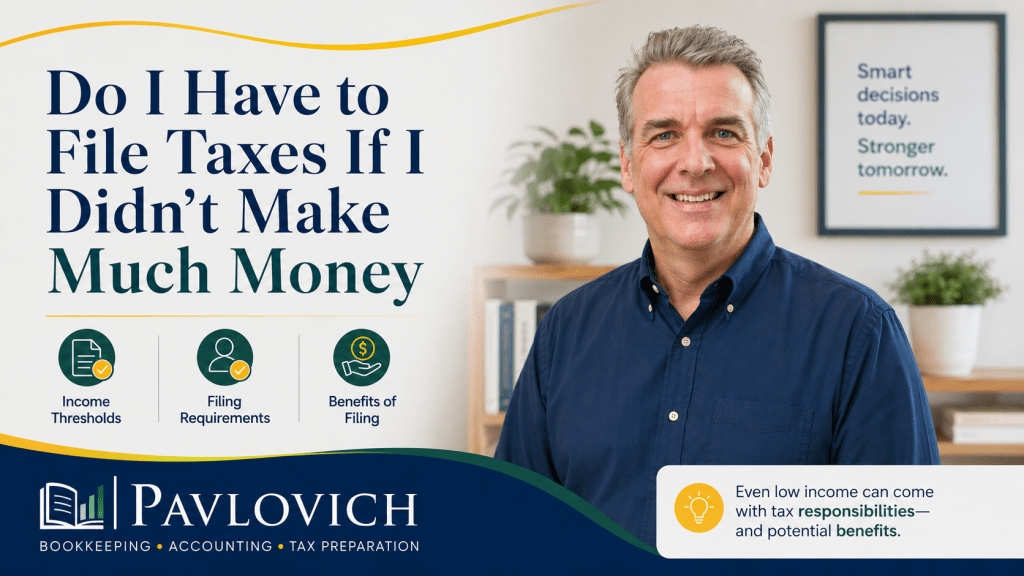
Earning a small amount of money does not always mean you can skip filing a tax return. You might be wondering, do I have to file taxes if I didn’t make much money? In some situations, the IRS may require you to file. Even when filing is optional, submitting a return could help you recover federal income tax withheld from your pay or claim a refundable tax credit.
Your filing requirement depends on more than the amount shown on your W-2. Filing status, age, dependency status, income type, and self-employment earnings can all affect whether you need to file.
How Much Can You Make Without Filing Taxes?
The IRS updates its income filing thresholds each year. For 2025 tax returns filed in 2026, most taxpayers under age 65 generally must file when their gross income reaches the following amounts:
- Single: $15,750
- Head of household: $23,625
- Married filing jointly: $31,500 when both spouses are under 65
- Married filing separately: $5
- Qualifying surviving spouse: $31,500
Higher thresholds may apply when a taxpayer or spouse is age 65 or older. Different rules also apply to people who another taxpayer can claim as a dependent.
Because filing requirements change and exceptions may apply, review the IRS guidance on whether you need to file a tax return before deciding not to file. (IRS)
Low Income Does Not Always Mean You Can Skip Filing
You may need to file even when your income falls below the standard threshold.
For example, independent contractors, freelancers, gig workers, and other self-employed individuals generally must file a federal return when their net self-employment earnings reach $400 or more. Net earnings usually mean business income after allowable business expenses.
That rule can apply even when the work was temporary, part-time, or completed as a side job. The IRS provides additional guidance through its Self-Employed Individuals Tax Center. (IRS)
Other circumstances can also create a filing requirement. These may include certain retirement-account taxes, household employment taxes, advance premium tax credit payments, or other less common tax situations.
Why You May Want to File Even When You Are Not Required To
Filing a tax return can still make sense when your income falls below the required filing threshold.
You Had Federal Income Tax Withheld
Employers may withhold federal income tax from each paycheck based on the information you provide on Form W-4. When your total tax liability is less than the amount withheld, you may qualify for a refund.
However, the IRS will not automatically send back excess federal withholding. You generally need to file a tax return to calculate and claim the refund.
For example, suppose you worked part-time, earned $6,000, and had $500 in federal income tax withheld. If you do not otherwise owe tax, filing a return may allow you to recover some or all of that withholding. Your actual result will depend on the rest of your tax information.
You May Qualify for the Earned Income Tax Credit
The Earned Income Tax Credit, commonly called the EITC, helps qualifying low- to moderate-income workers and families. Depending on your income, filing status, age, and qualifying children, the credit may reduce the tax you owe or increase your refund.
Income below the normal filing threshold does not automatically prevent you from qualifying. The IRS offers an EITC Assistant to help taxpayers review basic eligibility requirements. (IRS)
You Paid Qualified College Expenses
Eligible students, parents, or spouses may qualify for the American Opportunity Tax Credit for certain higher-education expenses. The credit can be worth up to $2,500 per eligible student, and up to $1,000 may be refundable.
Education credits have detailed requirements involving enrollment, eligible expenses, dependency status, and income. Review the IRS information about the American Opportunity Tax Credit and Lifetime Learning Credit before claiming either credit. (IRS)
You May Qualify for Other Refundable Credits
Depending on your circumstances, you may also qualify for a refundable or partially refundable credit related to children, health insurance purchased through the Marketplace, or another qualifying situation.
A refundable credit can produce a refund even when you owe little or no federal income tax. Eligibility rules vary, so low income alone does not confirm that you qualify. The IRS maintains an overview of refundable tax credits. (IRS)
Your State May Have Separate Rules
Federal and state tax returns follow different filing requirements. You may need to file a state return even when you do not have to file federally. In other cases, a state return may allow you to recover state income tax withheld from your pay.
Check the official tax agency website for the state where you lived or earned income. People who worked in more than one state may have additional filing considerations.
What If Someone Else Can Claim You as a Dependent?
Students and first-time filers often assume they do not need to file because a parent can claim them as a dependent. However, dependency status does not automatically remove the filing requirement.
The IRS applies separate income rules to dependents. Earned income, unearned income, age, marital status, and whether the person is blind can all affect the result. Unearned income may include interest, dividends, unemployment compensation, or investment income.
Before filing, confirm whether someone else can claim you. That answer can affect your standard deduction, education credits, and other parts of the return. IRS Publication 501 explains the filing rules for dependents in more detail. (IRS)
What Documents Should You Review?
Gathering your records can help you determine whether filing makes sense. Start with:
- Forms W-2 from employers
- Forms 1099 for contract, gig, interest, or other income
- Records of cash or electronic payments from self-employment
- Business expense records for freelance or independent work
- Form 1098-T and education expense records
- Health insurance Marketplace forms
- Information about dependents
- Records showing federal or state taxes withheld
Compare those documents with your own records before preparing the return. Missing income forms can delay processing or lead to an incorrect return.
Should You File a Tax Return If You Made Very Little?
You may not have a federal filing requirement when your income falls below the applicable threshold. Still, filing could allow you to claim withheld taxes or credits for which you qualify.
Do not base the decision on income alone. Review your filing status, age, dependency status, self-employment earnings, withholding, and possible credits. When your situation includes several income sources or you are unsure how the rules apply, professional tax preparation can help you understand your options.
Need help determining whether you should file? Ask Pavlovich Bookkeeping & Accounting about personal tax preparation and whether your return is a good fit for our services.