Key Takeaways
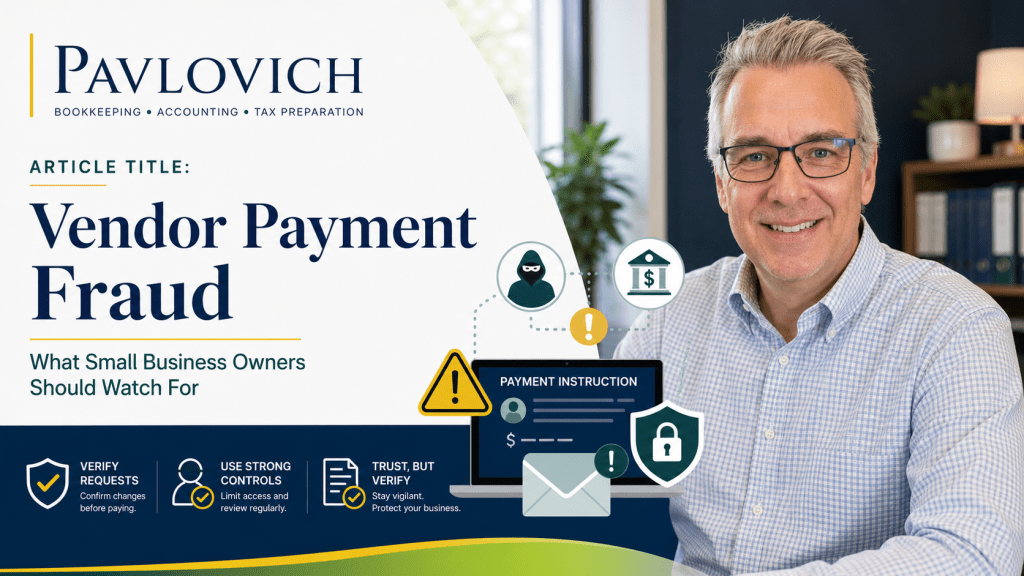
- Vendor payment fraud often disguises itself as normal business activity, making it hard to detect.
- To prevent fraud, maintain organized bookkeeping and consistent payment procedures for better oversight.
- Common signs of vendor payment fraud include fake invoices, duplicate payments, and unexpected changes in payment instructions.
- Verify any suspicious payment requests independently, especially those that create urgency or involve unfamiliar vendors.
- A well-structured vendor review process can help identify and prevent vendor payment fraud before it occurs.
Vendor payment fraud does not always look suspicious at first.
An invoice arrives from a company that appears familiar. A vendor emails new banking instructions. A past-due notice asks for immediate payment. Someone processes the bill because the amount looks reasonable and the request seems like part of the normal workflow.
That ordinary appearance is what makes vendor payment fraud difficult to catch.
Small businesses often manage vendor payments while also handling customers, employees, projects, scheduling, and dozens of other responsibilities. When invoices, approvals, vendor records, and payment details do not follow a consistent process, an unusual request can blend into everyday business activity.
The Federal Trade Commission continues to warn small businesses about fake invoices for products or services they never ordered. In May 2026, the FTC advised businesses to review invoices carefully, maintain clear approval procedures, and investigate companies they do not recognize before paying them. (Consumer Advice)
Vendor payment fraud is not only a cybersecurity problem. It is also a financial process problem.
Organized bookkeeping, accurate vendor records, consistent payment procedures, and regular financial review can help a business recognize when something does not fit. These controls cannot eliminate fraud, but they can make suspicious activity easier to identify before or after money leaves the business.
Why Vendor Payment Fraud Can Be Easy to Miss
Most business owners do not intentionally ignore payment controls. Instead, their processes often develop informally as the business grows.
At first, the owner may receive every invoice, approve every purchase, and make every payment. Later, an employee may start forwarding bills. A manager may approve purchases. Vendors may send invoices to several email addresses. Payments may come from a bank account, credit card, ACH transfer, check, or online portal.
Without a clear process, no single person may have the full picture.
For example, an employee may receive an invoice that looks legitimate but does not know whether anyone actually ordered the service. Another team member may pay a bill without realizing someone else already processed it. A vendor may appear to request new ACH instructions, even though a fraudster actually sent the message.
Business email compromise can make these situations especially difficult to recognize. The FBI warns that criminals may send messages that appear to come from known vendors or other trusted sources. The agency recommends independently verifying payment requests and any change in account numbers or payment procedures. (FBI)
The goal is not to treat every invoice as fraudulent. Instead, businesses need enough organization to tell the difference between normal activity and something that deserves a second look.
Fake or Unexpected Invoices
A fake invoice may charge a business for office supplies, advertising, technology services, subscriptions, directory listings, domain services, or other products the company never ordered.
Some scams rely on volume. The sender hopes that a busy employee will recognize the type of expense, assume someone else approved it, and pay without asking questions.
Others use pressure. The invoice may say the account is overdue, threaten service interruption, or create the impression that immediate payment is necessary.
The FTC advises businesses to check invoices carefully and confirm that the company actually ordered the product or service before paying. (Federal Trade Commission)
A simple question can stop many questionable payments:
What approved purchase, agreement, or existing vendor relationship supports this invoice?
When a business keeps contracts, purchase records, recurring service information, prior invoices, and vendor contact details organized, that question becomes much easier to answer.
Duplicate and Altered Invoices
Not every duplicate invoice involves fraud. Vendors make mistakes, invoices get resent, and the same bill may arrive through more than one channel.
However, weak payment tracking increases the risk of paying the same obligation twice.
A duplicate may appear as:
- The same invoice number submitted more than once.
- Two invoices with the same amount and service period.
- An emailed invoice followed by a mailed copy.
- A payment reminder for an invoice the business already paid.
- The same bill entered separately by two people.
Altered invoices create another risk. A legitimate invoice may be changed to show a different payment address, bank account, amount, or payment portal.
Good bookkeeping records give the business something to compare against. Invoice numbers, payment dates, vendor balances, prior payment methods, and reconciled bank activity can help reveal when a bill does not match the existing financial record.
Regular review matters because an isolated transaction may look ordinary. A complete vendor history often tells a clearer story.
Changed Payment Instructions
A request to change vendor payment instructions deserves additional review.
The message may ask the business to use:
- A new bank account.
- Different ACH instructions.
- A new mailing address.
- Another payment portal.
- A different contact person.
- A new account for wire transfers.
The request may be completely legitimate. Vendors change banks and payment systems.
Still, a business should not rely on the email alone.
The FBI recommends verifying changes in account information or payment procedures through a separate channel. That may mean calling a trusted vendor contact using a phone number already on file rather than using the contact information included in the new request. (FBI)
Consider a contractor who has paid the same materials supplier for two years. An email suddenly asks the company to send future ACH payments to a new account. The message includes the correct logo, familiar names, and information about an actual project.
Instead of assuming the request is legitimate, the contractor calls the supplier using the phone number already stored in the vendor record. That extra step may confirm a valid change—or prevent money from going to the wrong account.
The process does not need to be complicated. It simply needs to be consistent.
Urgency and Pressure to Skip the Normal Process
Fraud often works by making people feel they do not have time to verify a request.
A message may claim:
- The invoice is severely overdue.
- A shipment will be canceled.
- Service will be disconnected.
- The owner already approved the payment.
- The payment must happen immediately.
- Normal procedures should be bypassed.
Pressure should not replace verification.
A well-designed payment process gives employees permission to slow down when something changes. Instead of deciding whether a request “looks real,” they can follow the same procedure every time.
For example, a business may require direct verification before changing vendor banking information. New vendors may need owner or manager approval before the first payment. Larger payments may require a second review.
Clear procedures reduce guesswork.
Unfamiliar Vendor Names
An unfamiliar vendor name does not automatically mean fraud.
A supplier may bill under a legal business name rather than the trade name employees recognize. A payment processor, parent company, franchise operator, or related company may appear on the invoice or bank statement.
However, unfamiliar names still need an explanation.
Before approving payment, compare the invoice with:
- Contracts or service agreements.
- Purchase records.
- Emails with the vendor.
- Delivery information.
- Prior invoices.
- Existing bookkeeping records.
The FTC also recommends researching companies that a business does not recognize before paying an unexpected invoice. (Consumer Advice)
An organized vendor list makes this review easier. Useful records may include the vendor’s legal name, common business name, contact information, normal payment method, recurring services, and notes about the relationship.
The goal is not to create unnecessary paperwork. It is to give the business enough information to understand who it is paying and why.
Build a Practical Vendor Payment Review Process
Small businesses do not need the same payment system as a large corporation. A few consistent steps can create a much stronger process.
Confirm the Purchase
Before paying an invoice, identify what the business purchased.
Ask whether the bill connects to an approved order, signed agreement, recurring service, completed job, or other legitimate business activity.
Someone should be able to explain what the payment is for.
Match the Invoice to the Vendor Record
Compare the invoice with the information already on file.
Look at the vendor name, address, payment method, invoice number, service period, and usual billing pattern. A difference does not automatically mean something is wrong, but unexplained changes deserve attention.
Check for Previous Payment
Review the bookkeeping records before sending money.
A properly maintained accounting system can help identify whether the same invoice number, amount, or obligation already appears as paid. Bank and credit card reconciliations add another layer of review by comparing recorded activity with the actual financial accounts.
Verify Important Changes Separately
Do not approve new payment instructions based only on the message requesting the change.
Use a trusted contact method that already exists in your records. Document who confirmed the change and when the verification occurred.
Record the Approval and Payment
Keep enough documentation to understand the transaction later.
That may include the invoice, payment date, payment method, approval information, and notes about any unusual changes.
Months later, the business should still be able to answer:
Who did we pay, what did we pay for, and why did this payment make sense?
How Organized Bookkeeping Supports Better Vendor Oversight
Bookkeeping does more than record money after it moves.
When financial records stay current, the business can review vendor activity with context. Owners can see what they normally spend, which companies receive recurring payments, whether bills appear more than once, and whether account activity matches the records.
Monthly reconciliations also help confirm that transactions recorded in the books agree with actual bank and credit card activity.
However, bookkeeping alone cannot prevent vendor payment fraud. A bookkeeper may record a transaction correctly even when someone approved the underlying payment incorrectly.
That is why process matters.
Strong financial organization combines accurate bookkeeping with practical controls such as:
- Clear vendor records.
- Consistent invoice approval.
- Independent verification of payment changes.
- Documented payments.
- Regular account reconciliations.
- Periodic review of vendor activity.
Together, these steps give business owners better visibility into where their money is going.
Accounting Support Adds Context to the Numbers
Accurate records create the foundation. Accounting support helps the business make sense of what those records show.
Suppose a company regularly spends about $3,000 per month with a particular supplier. Suddenly, the monthly financial reports show $8,500 of expense connected to that vendor.
The increase may be completely legitimate. Perhaps the business took on a larger project or purchased additional materials.
Still, the change gives the owner something to investigate.
Financial reports do not prove fraud, and unusual numbers often have reasonable explanations. However, consistent reporting can help owners notice changes that might otherwise disappear inside hundreds of individual transactions.
A practical monthly review may include questions such as:
- Did we add any new vendors this month?
- Did any vendor receive an unusually large payment?
- Did recurring expenses increase unexpectedly?
- Are there duplicate or similar payments?
- Did any vendor change its payment method?
- Are there transactions we still cannot explain?
- Do the books agree with the bank and credit card accounts?
This is where bookkeeping and accounting support work together.
Bookkeeping organizes the financial activity. Financial reporting and review help the business understand what changed and where further questions may be appropriate.
What Small Businesses Should Review Each Month
A monthly vendor review does not need to take hours.
The business can focus on exceptions—items that differ from the normal pattern.
Pay particular attention to:
New Vendors
Confirm who approved the relationship and what the business purchased.
Large or Unusual Payments
Compare the payment with the invoice, contract, project, or other supporting documentation.
Duplicate Amounts
Two payments for the same amount may be legitimate, but they may also point to duplicate processing.
Changes in Recurring Charges
Review subscriptions, service agreements, and automatic payments when the amount changes unexpectedly.
Vendor Payment Changes
Make sure the business independently verified new banking instructions, addresses, or payment portals.
Unclear Transactions
Do not leave unexplained payments buried in a general expense category simply because no one has time to investigate them.
Reconciliation Differences
Bank or credit card activity that does not match the books needs review. The cause may be a timing difference, bookkeeping error, missing transaction, duplicate entry, or another issue.
This routine supports more than fraud awareness. It also improves financial reporting, keeps vendor information organized, and gives owners a clearer understanding of business expenses.
What to Do When a Payment Request Looks Suspicious
When something does not look right, pause the payment process.
Do not click an unexpected link or open an unfamiliar attachment simply to investigate an invoice. Instead, review the existing vendor record and contact the company through a trusted method.
If the business already sent money and suspects fraud, act quickly.
The FBI’s Internet Crime Complaint Center advises victims of fraudulent transfers to contact their financial institution immediately and request assistance with recalling the funds. The FBI also encourages prompt reporting to IC3 because rapid action may improve the opportunity to freeze or recover transferred funds. (Internet Crime Complaint Center)
Businesses can also report scams and fraudulent invoices to the Federal Trade Commission. (Consumer Advice)
Depending on the situation, the business may also need support from its bank, attorney, insurance provider, IT professional, cybersecurity specialist, or law enforcement.
Better Payment Controls Start With Better Financial Organization
Vendor payment fraud often succeeds because a questionable request looks close enough to normal.
That is why small businesses benefit from knowing what normal actually looks like.
Organized vendor records show who the business works with. Consistent invoice procedures explain what the company agreed to purchase. Reconciled accounts confirm where money went. Financial reports help owners review spending patterns and ask better questions when something changes.
No bookkeeping system can guarantee that fraud will never happen. Still, clear records and consistent review give business owners a stronger financial process and better information when something does not make sense.
Pavlovich Bookkeeping & Accounting helps small business owners maintain organized records, understand their financial activity, and build a clearer monthly bookkeeping and accounting process. Need help getting your books and vendor records organized? Schedule a consultation to discuss your current financial records and determine the right next step.