
Key Takeaways
- Small business fraud prevention is critical as many financial activities can go unnoticed without proper oversight.
- Implementing a routine of weekly bank reviews and monthly reconciliations helps identify suspicious activity early.
- Vendor payments and approvals must be verified to avoid common fraud tactics like fake invoices and email compromises.
- Separating financial responsibilities and controlling system access enhance security against potential fraud.
- Encouraging employees to report concerns and maintaining organized records can significantly improve fraud detection efforts.
Fraud prevention may sound like something only large companies need. However, small businesses also process vendor payments, payroll, refunds, reimbursements, transfers, card purchases, and customer deposits. When no one reviews those activities consistently, errors or suspicious transactions can remain unnoticed.
A practical fraud prevention routine creates regular opportunities to ask questions before a small problem becomes harder to resolve. It also supports accurate bookkeeping, clearer financial reports, and more dependable tax-ready records.
The goal is not to treat every mistake as fraud. Instead, your routine should make unusual activity easier to recognize, investigate, and explain.
Why Small Businesses Need Consistent Financial Oversight
Small businesses often rely on trust and informal processes. One person may receive invoices, enter bills, approve payments, and review the bank account. Although that arrangement may feel efficient, it can leave the business without an independent check.
Fraud can also continue longer when financial reviews happen only occasionally. The Association of Certified Fraud Examiners reported that the typical occupational fraud case in its 2026 study lasted 12 months before detection. Tips uncovered 43% of the cases, while organizations with anti-fraud controls generally experienced lower losses and faster detection. The same report found that smaller businesses experienced the highest median losses among the organization sizes studied. (ACFE)
Those findings do not mean every small business needs a complicated internal audit system. Most owners can improve oversight by creating a few repeatable habits and following them consistently.
Review Bank and Credit Card Activity Every Week
Bank and credit card accounts show where money enters and leaves your business. Reviewing that activity every week helps you recognize problems while the details remain fresh.
During your review, look for:
- Vendors you do not recognize
- Duplicate charges
- Unexpected transfers or withdrawals
- Purchases that do not fit normal business activity
- Unusual cash withdrawals
- Changes in recurring payment amounts
- Customer refunds you did not approve
- Deposits that appear incomplete or missing
- Personal purchases made from a business account
Do not limit the review to your main checking account. Include business credit cards, savings accounts, payment processors, payroll accounts, and other services that move money.
A weekly review also improves bookkeeping. You can locate missing receipts sooner, clarify unfamiliar vendor names, and correct personal transactions before they create confusing financial reports.
Verify Vendor Payments Before Sending Money
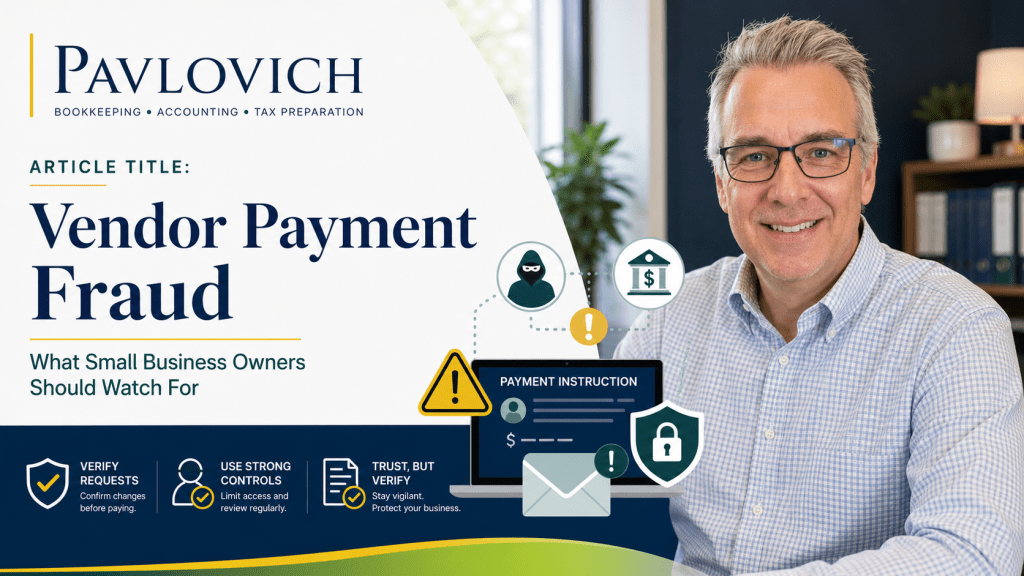
Vendor payment fraud may begin with a fake invoice, an impersonated email account, or a request to change banking information. Some messages look convincing because they use familiar vendor names, previous invoice details, or an existing email conversation.
The FBI describes business email compromise as a scam in which criminals send messages that appear to come from a trusted source. One common example involves a familiar vendor sending an invoice with supposedly updated payment instructions. (FBI)
Before paying an invoice, confirm:
- Your business ordered the product or service
- The vendor name matches your records
- The invoice amount agrees with the contract, quote, or purchase
- Someone received the goods or confirmed the work
- The payment method makes sense
- The invoice has not already been paid
- Any changed payment instructions are legitimate
Never verify a banking change by replying to the same email that requested it. Call the vendor using a phone number already in your records or obtained independently. Do not use the number provided in the suspicious message.
Urgency should also prompt a closer review. A request marked “past due,” “confidential,” or “pay immediately” may be legitimate, but pressure should never replace verification.
Create Clear Payment Approval Steps
A good approval process answers basic questions before money leaves the business. It does not need to create delays or unnecessary paperwork.
Your process might require owner approval for:
- New vendors
- Large purchases
- Wire transfers
- Customer refunds
- Employee reimbursements
- Changes to vendor banking information
- Payments without supporting invoices
- Unusual bonuses or payroll adjustments
Set approval limits that fit the size and activity of your business. For example, a manager may approve routine purchases below a certain amount, while the owner reviews larger or less familiar transactions.
Document approvals whenever practical. An email, software approval record, signed invoice, or note attached to the transaction can create a useful financial trail.
Reconcile Every Account Each Month
Reviewing bank activity and reconciling an account are related, but they are not the same task.
A bank review helps you scan recent activity. A reconciliation compares your bookkeeping records with an outside statement to confirm that the balances and transactions agree.
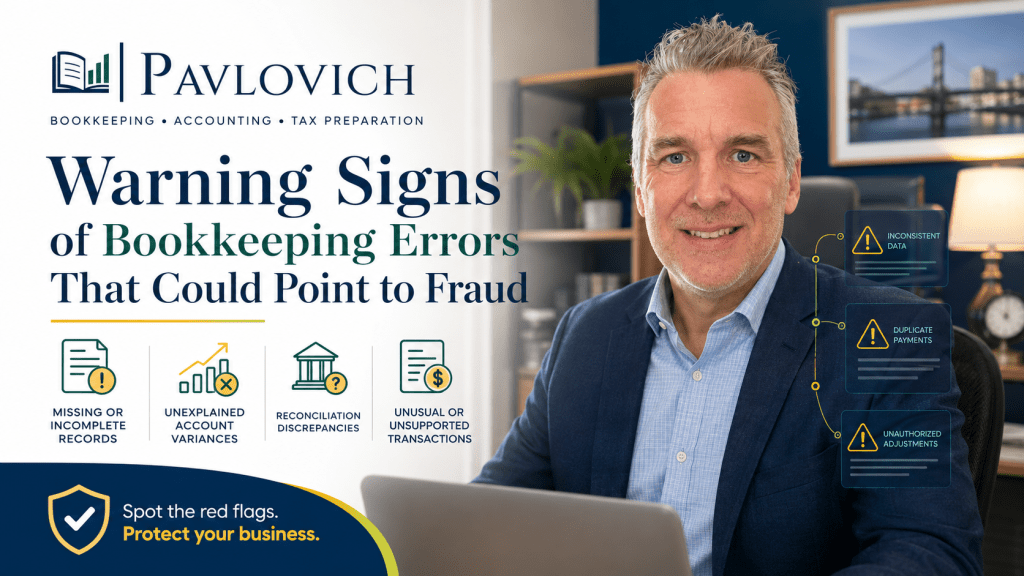
Monthly reconciliations can uncover:
- Missing transactions
- Duplicate entries
- Bank feed errors
- Incorrect transaction amounts
- Old checks that never cleared
- Deposits recorded twice
- Payments posted to the wrong account
- Fees or interest that were not recorded
- Unauthorized activity
Reconcile every account that affects your financial records. Depending on the business, that may include checking accounts, savings accounts, credit cards, loans, lines of credit, payroll accounts, and merchant processors.
A bank balance can look reasonable while the bookkeeping records still contain errors. Regular reconciliations help you trust the financial reports you use for cash flow review, tax preparation, and business decisions.
Review Financial Reports for Unusual Patterns
Fraud prevention involves more than looking for one unfamiliar charge. Financial reports can reveal patterns that individual transactions do not show clearly.
Review your profit and loss statement each month and compare it with prior periods. Ask questions when revenue, expenses, payroll, refunds, or vendor costs change unexpectedly.
For example, investigate when:
- Sales increase but cash remains unusually low
- One expense category rises without a clear business reason
- Payments to a vendor increase suddenly
- Refunds or discounts appear more often
- Payroll costs change without staffing changes
- Contractor payments do not match completed work
- An account contains large uncategorized balances
- Owner withdrawals appear inconsistent or unclear
A change does not automatically indicate fraud. Timing differences, seasonal activity, missing paperwork, coding mistakes, and duplicate entries can also affect a report.
Still, every unexpected change deserves a reasonable explanation. Organized bookkeeping makes those explanations easier to find.
Separate Financial Responsibilities When Possible
Separation of duties means dividing a financial process so one person does not control every step. Large companies may separate purchasing, payment approval, bookkeeping, and reconciliation among several employees.
Small businesses often cannot divide responsibilities that extensively. However, even limited separation can strengthen oversight.
Consider arrangements such as:
- One person enters bills, while the owner approves payments
- An employee collects receipts, while the bookkeeper reviews transactions
- A bookkeeper reconciles accounts, while the owner reviews statements
- One person prepares payroll, while another approves the final report
- An office manager adds vendors, while the owner approves banking changes
Solo business owners can create an additional layer of review by working with an outside bookkeeping professional. The bookkeeper can reconcile accounts, organize transactions, and identify items that need clarification. Meanwhile, the owner should continue reviewing bank activity and financial reports.
Outside bookkeeping support does not replace owner oversight. Instead, the two roles work together to create a clearer financial process.
Control Access to Financial Systems
Employees and contractors should receive only the access they need to perform their responsibilities. Someone who enters invoices may not need permission to send payments. Likewise, a person who views reports may not need access to payroll or bank information.
Review access to:
- Online banking
- Business credit cards
- QuickBooks or other accounting software
- Payroll systems
- Payment processors
- Expense management tools
- Shared email accounts
- Cloud document storage
Remove access promptly when an employee or contractor leaves the business. You should also review active users periodically because roles and responsibilities change over time.
Use unique passwords and multi-factor authentication whenever available. The IRS recommends multi-factor authentication, strong passwords, limited access to sensitive data, secure backups, and separate personal and business email accounts as part of protecting business information. (IRS)
Review Your Vendor List Regularly
Vendor records can become disorganized as a business grows. Old vendors remain active, duplicate names appear, and payment details change.
Review your vendor list at least quarterly. Look for:
- Vendors you no longer use
- Duplicate vendor profiles
- Missing contact information
- Unexplained changes to addresses or bank accounts
- Vague or unfamiliar vendor names
- Several vendors with similar names
- Repeated small payments
- Vendors connected to employees or owners
Clean vendor records improve more than fraud prevention. They also make reports easier to read, support accurate year-end records, and help you understand where the business spends money.
Any request to change payment information deserves immediate attention. Do not wait for the quarterly review before verifying it.
Pay Close Attention to Payroll and Contractor Payments
Payroll and contractor payments involve recurring transactions and sensitive information. Because these payments may follow a regular schedule, an unusual change can blend into normal activity.
Review payroll reports for:
- Employees you do not recognize
- Duplicate payments
- Unexpected bonuses
- Unapproved rate changes
- Unusual overtime
- Incorrect hours
- Payments issued after an employee has left
- Changes to direct-deposit information
Contractor records should include completed Forms W-9, invoices, payment details, and descriptions of the work performed. Compare payments with approved invoices or contracts.
Owner transactions also need clear records. Track owner draws, contributions, reimbursements, and personal purchases separately. When owner activity mixes with regular business expenses, financial reports become harder to understand and unusual transactions become harder to evaluate.
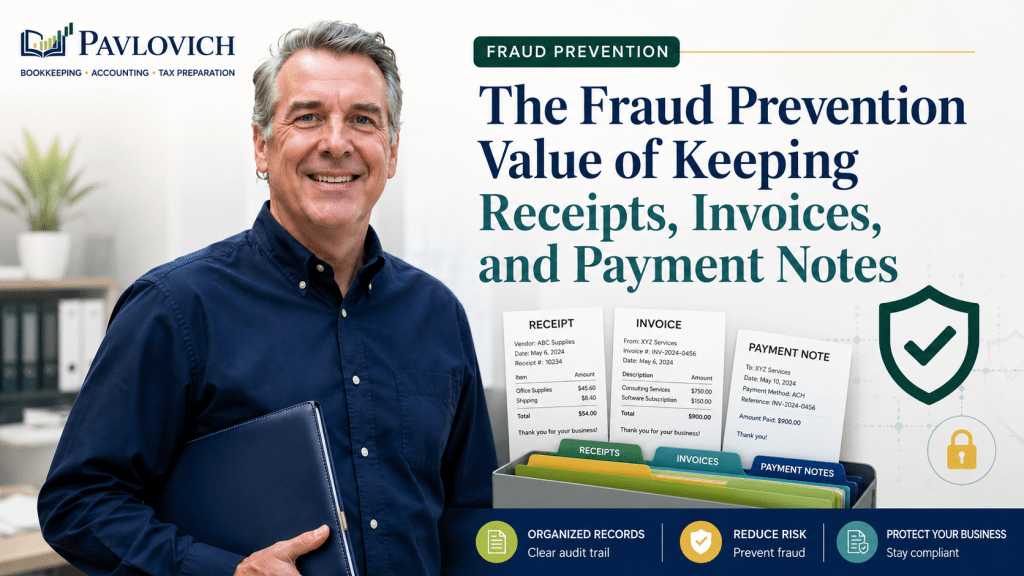
Keep Receipts and Supporting Documents Organized
Source documents help explain what happened before and after money moved. Useful records may include:
- Receipts
- Vendor invoices
- Customer invoices
- Contracts
- Purchase orders
- Bank and credit card statements
- Payment confirmations
- Payroll reports
- Reimbursement requests
- Emails approving purchases or payment changes
Choose a system your team can follow consistently. You might attach documents directly to transactions in your bookkeeping software, use secure digital folders, or create a dedicated email address for receipts and invoices.
A document should provide enough information to explain the business purpose. A payment confirmation without the invoice may not show what the business purchased. Likewise, a receipt without a note may not explain why the expense belonged to the business.
Organized documents create a clearer audit trail and reduce the time required to answer questions.
Give Employees a Way to Report Concerns
Employees often see daily activities that owners may not notice. They may recognize unusual vendor requests, changes in payment procedures, missing inventory, or pressure to bypass normal approvals.
Create a clear way for employees to raise concerns. Depending on the size of the business, they might report directly to the owner, a manager, an outside human resources provider, or another designated contact.
Take concerns seriously without assuming wrongdoing. A fair review process protects the person who raised the concern as well as the person or transaction being questioned.
The ACFE’s 2026 study found that tips remained the most common way organizations detected occupational fraud. More than half of those tips came from employees. (ACFE)
Follow a Practical Review Schedule
A written schedule helps turn fraud prevention into part of the normal bookkeeping and accounting process.
Every week
- Review bank and credit card activity
- Investigate unfamiliar transactions
- Check payment processor deposits
- Confirm unusual transfers or withdrawals
- Gather missing receipts and invoices
Every month
- Reconcile all financial accounts
- Review the profit and loss statement
- Examine payroll and contractor payments
- Review refunds and reimbursements
- Investigate duplicate or uncategorized transactions
- Confirm that supporting documents are complete
Every quarter
- Review active vendors
- Review user permissions
- Remove outdated system access
- Revisit payment approval limits
- Check recurring subscriptions and automatic withdrawals
- Discuss unusual financial trends
Whenever payment information changes
- Verify the request through a trusted contact method
- Require an additional approval
- Document who confirmed the change
- Review the first payment carefully
Consistency matters more than creating a complicated system. A short routine that actually happens provides more value than a detailed policy that no one follows.
What Should You Do When Something Looks Wrong?
Unusual activity does not always mean someone committed fraud. A transaction may result from an accounting error, bank feed problem, missing document, timing difference, or misunderstanding.
Start by gathering the facts. Preserve invoices, emails, statements, screenshots, approval records, and other related documents. Avoid deleting or changing information before you understand what happened.
For an unauthorized bank transaction, contact the financial institution promptly. When business email compromise may have caused a fraudulent transfer, the FBI advises businesses to contact their financial institution immediately and report the incident to the Internet Crime Complaint Center. (FBI)
Change passwords and review system access when someone may have compromised an account. Depending on the situation, you may also need help from an attorney, insurance carrier, cybersecurity professional, forensic accountant, CPA, or law enforcement agency.
Business identity theft involving tax filings requires a separate response. The IRS instructs eligible businesses to use Form 14039-B when someone appears to have used the business name or Employer Identification Number to file a fraudulent return or Forms W-2. Warning signs include a notice about a return the business did not file, an unexpected balance due, or an e-file rejection because the IRS already received a return for that period. (IRS)
A bookkeeping professional can help locate records, review account activity, and explain how transactions appear in the books. However, ordinary bookkeeping services do not replace a formal fraud investigation, legal advice, or forensic accounting.
Organized Books Make Financial Oversight Easier
Fraud prevention works best when it becomes part of the business’s regular financial routine.
Weekly account reviews help owners recognize unfamiliar activity. Monthly reconciliations confirm that the books agree with outside statements. Clear approvals reduce rushed payments, while organized documents explain the purpose behind each transaction.
No financial process can guarantee that fraud will never occur. Still, consistent oversight helps a business notice problems earlier, ask better questions, and maintain records that are easier to understand.
Pavlovich Bookkeeping & Accounting helps small business owners maintain organized books, reconcile financial accounts, review meaningful reports, and keep tax-ready records. Need a clearer monthly process for understanding where your business stands? Schedule a consultation to ask about bookkeeping and accounting support.