
Key Takeaways
- Missing personal tax documents often arise from multiple sources like employers and banks.
- Organizing tax records before filing helps prevent last-minute searches for documents.
- To locate missing documents, retrace your steps and check various online and physical locations.
- Create a simple filing system to categorize your tax documents for easy access.
- Consider consulting a tax professional for assistance in organizing and filing your taxes.
Personal tax documents rarely disappear all at once. If you’re thinking, “I lost documents I need for my taxes,” you’re not alone. More often, they arrive through different channels and end up scattered across email inboxes, employer portals, bank websites, paper mail, school accounts, healthcare portals, and filing cabinets.
That creates a common tax-time problem: you know the document probably exists, but you cannot remember where to find it.
Gathering your records before you file can help you prepare a more complete return and reduce last-minute searches. The IRS recommends collecting income forms, records for credits and deductions, side-job information, and other relevant documents before preparing a return. Its tax document gathering guidance provides a useful starting point. (IRS)
The goal is not to save every piece of paper you receive. Instead, create a system that helps you know which personal tax documents to expect, where to look for them, and what to do when something appears to be missing.
Why Personal Tax Documents Get Misplaced
Most people do not lose tax documents because they are careless. Documents simply arrive from too many places.
An employer may post a W-2 in a payroll portal. Your bank may provide a 1099-INT electronically. A college may place Form 1098-T inside a student account, while a mortgage company may upload Form 1098 to a loan portal.
Meanwhile, another tax form may arrive through regular mail.
Electronic delivery adds convenience, but it also means there may not be a physical envelope sitting on your desk to remind you that a document exists.
Before filing, think through the places where you earned income, held accounts, paid certain expenses, received benefits, or experienced a major life change. That simple review can help you identify documents that might otherwise be overlooked.
W-2s From Current and Former Employers
Most employees remember the W-2 from their primary job. However, a W-2 from a former employer, seasonal position, second job, or short-term employer can be easier to forget.
If you worked for more than one employer during the year, make a list of every job you held. Then check:
- Current and former payroll portals
- Email notifications
- Paper mail
- Employee benefit websites
- Old mailing addresses, when applicable
Do not assume that every employer delivered the form the same way.
The IRS includes Forms W-2 among the income documents taxpayers should gather before filing. (IRS)
When a W-2 appears to be missing, start by contacting the employer or checking the employer’s payroll provider. You can also review the IRS’s information about tax records and transcripts, although a transcript may not replace the original document in every situation. (IRS)
1099 Forms From Banks, Brokerages, Retirement Accounts, and Other Payers
Forms 1099 often create more confusion because one person may receive several different types.
Common examples include:
- Form 1099-INT for interest income
- Form 1099-DIV for dividends and distributions
- Form 1099-R for certain retirement plan, pension, or annuity distributions
- Form 1099-G for certain government payments
- Form 1099-NEC for nonemployee compensation
- Form 1099-MISC for certain other reportable payments
A small account can be easy to forget. For example, you may close a savings account early in the year and overlook the tax document months later. Likewise, an old brokerage or retirement account may post forms electronically without sending a paper copy.
Review every financial institution and account you used during the year. Check online tax-document sections, secure messages, email notices, and paper mail.
The IRS identifies Forms W-2 and 1099 among the common information returns taxpayers may need when preparing a return. (IRS)
1099-K Forms From Payment Apps and Online Marketplaces
Form 1099-K can be especially easy to overlook because payment platforms and online marketplaces may make the form available only inside your account.
Receiving the form also does not mean the number on it tells the entire story of your taxable income by itself. Payment activity may need to be reviewed alongside your own records and the nature of the transactions.
For example, a payment platform account might contain business receipts, refunds, reimbursements, or other activity. Organized records help explain what actually occurred.
Therefore, check any payment apps, card processors, marketplaces, or online platforms you used during the year. Save the tax form along with transaction histories and other records that help explain the activity.
Mortgage Interest and Property Tax Records
Homeowners often remember to look for Form 1098 but forget related records.
Depending on your situation, you may need to gather:
- Form 1098 from your mortgage lender
- Property tax records
- Year-end escrow statements
- Closing documents
- Refinance records
- Home sale documents
A mortgage lender may place Form 1098 inside an online loan portal rather than mailing it.
Additionally, buying, selling, or refinancing a home can create records that remain important beyond one tax season. Keep those documents organized instead of assuming the annual mortgage statement covers everything.
Student Loan Interest and Tuition Forms
Education-related forms often hide inside student and lender portals.
Two commonly overlooked forms are:
- Form 1098-E, which reports certain student loan interest information
- Form 1098-T, which provides certain tuition-related information
Parents should not assume that a school will send education documents directly to them. The form may appear only under the student’s login.
Similarly, a student loan servicer may post Form 1098-E electronically.
Check the school account, student email, loan servicer portal, and any tax-document sections before concluding that a form never arrived.
Health Insurance Marketplace Form 1095-A
Form 1095-A can be easy to miss when someone had Marketplace health insurance for only part of the year.
The form provides information used in connection with the premium tax credit. The IRS explains the purpose of Form 1095-A and how it relates to Marketplace coverage on its Form 1095-A information page. (IRS)
Check your Marketplace account as well as your mail and email notifications.
Do not assume the form does not matter because your coverage changed during the year. Bring the document to your tax preparer so the details can be reviewed in the context of your return.
HSA and Medical Expense Records
Health Savings Account records may come from more than one source.
You might have records related to:
- HSA contributions
- HSA distributions
- Employer contributions
- Reimbursements
- Medical bills
- Pharmacy purchases
- Insurance payments
- Out-of-pocket expenses
Medical records can become especially difficult to reconstruct after the year ends. A bank or credit card statement may show that you paid a provider, but it may not explain what the payment covered or whether another party reimbursed part of the cost.
Keep invoices, receipts, explanations of benefits, payment confirmations, and relevant account statements together.
The IRS advises taxpayers to retain records that support income, deductions, or credits reported on a return. (IRS)
Childcare and Dependent Care Records
Childcare records often cause last-minute searches because families may pay the same provider through several methods during the year.
For example, payments might come from:
- A daycare portal
- Bank transfers
- Checks
- A dependent care account
- Credit or debit cards
- Direct payments to another provider
Before filing, gather the provider’s year-end statement and compare it with your own records.
You may also need identifying information for the care provider. Rather than waiting until your tax appointment, request missing information early.
This is especially important for families that changed childcare providers during the year or used more than one source of care.
Charitable Donation Records
Donations can become difficult to track because people give in many different ways.
You may donate through:
- A charity’s website
- A church or religious organization
- A workplace campaign
- A school fundraiser
- A credit card
- A check
- A thrift-store drop-off
- A noncash donation
Keep receipts, acknowledgment letters, payment records, and details about noncash contributions.
Do not rely on memory months later. Save the documentation when you make the contribution.
For larger or more complicated donations, recordkeeping requirements may vary. Your tax preparer can review the documentation and determine what information applies to your return.
Estimated Tax Payment Records
Estimated tax payments can become surprisingly difficult to reconstruct when you make several payments during the year.
This often affects:
- Sole proprietors
- Freelancers
- Gig workers
- Retirees
- Investors
- People with income that does not have enough withholding
Keep the payment date, amount, tax year, and whether the payment went to a federal or state tax agency.
Save confirmation numbers and payment receipts whenever possible.
A tax preparer should not have to guess whether you made a payment or which tax period it covered. Clear records help the preparer compare your information with the rest of the return.
Prior-Year Tax Returns and Supporting Schedules
People often save only a PDF of the main tax return or the first few pages. However, the full prior-year filing may contain schedules and details that help explain the current year.
Keep:
- Federal and state returns
- Supporting schedules
- Depreciation information
- Carryforward information
- K-1 forms, when applicable
- Related worksheets and supporting documents
Your prior-year return can provide useful context when income sources, dependents, investments, or other circumstances continue from one year to the next.
When you cannot locate a prior return, the IRS provides several types of transcripts. A wage and income transcript, for example, can show information from certain Forms W-2, 1098, 1099, and 5498 that the IRS has received. However, the IRS notes that transcript information may not include every document or all state and local information. (IRS)
IRS and State Tax Notices
A tax notice is another document people sometimes set aside and forget before their next filing appointment.
Keep any correspondence you receive from:
- The IRS
- Your state tax agency
- A local tax authority, when applicable
Bring the complete notice, including every page.
A notice may relate to a prior return, payment, adjustment, identity verification issue, or another matter that your preparer needs to understand before completing the current return.
Avoid summarizing the notice from memory. The actual document provides the details your preparer needs to review.
Records From Major Life Changes
A major life event can create tax-related documents that do not arrive in a familiar tax envelope.
Examples may include records connected with:
- Marriage or divorce
- Birth or adoption
- A dependent moving into or out of your household
- Retirement
- A home purchase or sale
- A legal name change
- The death of a family member
- Starting a side business
- Changing health insurance coverage
Not every document will affect every return. Still, tell your tax preparer about significant changes and bring the records that may help explain what happened.
Tax preparation works better when the preparer understands the full situation instead of discovering an important change after the return has already been prepared.
What Should You Do When a Tax Document Is Missing?
Start by retracing where the document should have come from.
A practical process looks like this:
- List the document you expect.
- Identify the employer, bank, school, lender, platform, or agency responsible for it.
- Check the organization’s online portal.
- Search your email for tax-document notifications.
- Review paper mail and old addresses.
- Contact the issuer when necessary.
- Review IRS transcript options when appropriate.
Do not simply leave out a form because you cannot find the paper copy.
The IRS allows individuals to access several types of tax records and transcripts online or by mail. However, transcripts have limitations, so use them as a record-recovery tool rather than assuming they replace every original document. (IRS)
Create a Simple Personal Tax Document System
You do not need a complicated filing system.
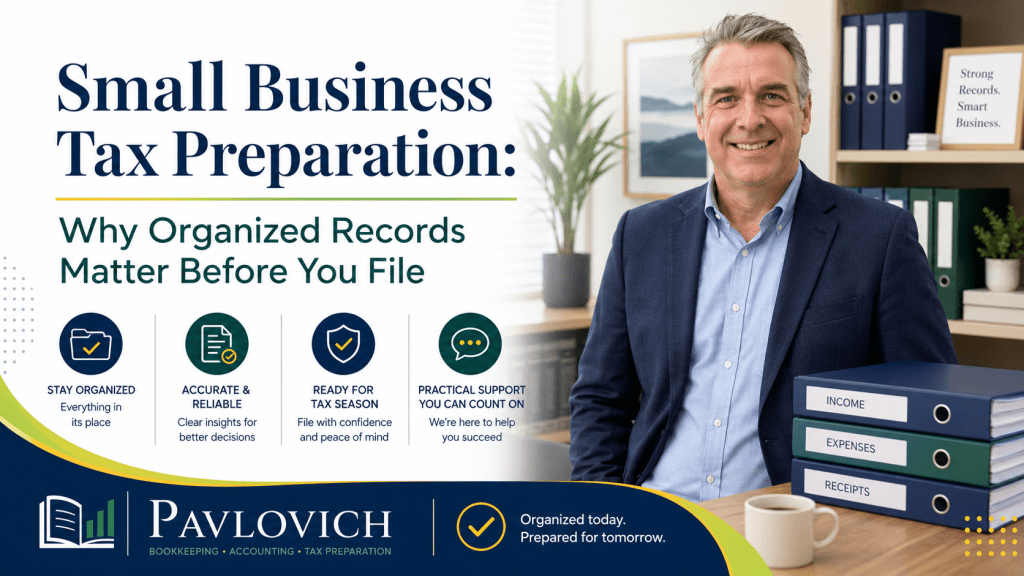
Start with one main folder for the tax year. A digital folder works well for electronic forms, while a paper folder can hold documents that arrive by mail.
Then create a few simple categories:
- Income
- Home
- Education
- Healthcare
- Childcare and Dependents
- Donations
- Tax Payments
- IRS and State Notices
- Prior-Year Returns
Use clear file names for digital documents.
For example:
W-2 – Employer Name1099-INT – Bank Name1098 – Mortgage Lender1098-T – School NameEstimated Tax Payment – FederalDaycare Year-End Statement
Next, make a list based on your actual life during the year.
Did you change jobs? Open or close a bank account? Sell investments? Use Marketplace health insurance? Pay tuition? Hire a childcare provider? Make estimated tax payments?
Your checklist should reflect your situation rather than a generic list of every possible tax form.
The IRS also recommends organized recordkeeping and explains that taxpayers should keep documents that support items reported on a return. Its recordkeeping guidance offers additional information about maintaining supporting records. (IRS)
Organize First, Then Let Your Tax Preparer Review the Details
You do not need to determine on your own whether every receipt, statement, or document affects your return.
Your job is to gather complete information and explain anything unusual.
From there, your tax preparer can review the records, ask follow-up questions, and determine what applies to your situation.
For a broader starting point, see Personal Tax Preparation: What Documents Should You Gather First?. Busy households may also find Personal Tax Preparation for Busy Families: How to Stay Ready for Tax Season helpful.
Get Help With Personal Tax Preparation
Personal tax preparation becomes easier when your records are organized before filing begins.
Pavlovich Bookkeeping & Accounting helps individuals and families prepare personal tax returns with clear communication and practical support. Our firm also provides limited small business tax preparation for sole proprietors, small LLCs, and similar simple businesses.
More complex tax situations may require a CPA or another specialized tax professional.
When personal tax documents are scattered across accounts, portals, and folders, start by gathering what you have rather than guessing about what is missing. A clear document system gives you and your tax preparer a better place to begin.
Need help preparing your personal tax return? Schedule a consultation with Pavlovich Bookkeeping & Accounting.