Key Takeaways
- Bookkeeping helps taxes by organizing business activity, making tax preparation more efficient and accurate.
- Small business owners benefit from current books, which clarify income, expenses, and financial positions before tax season.
- Recording clear income and expense details prevents misunderstandings and ensures compliance with IRS requirements.
- Reconciliation between bookkeeping records and bank statements uncovers errors and supports reliable financial reports.
- Consistent bookkeeping practices aid tax preparation and support better conversations with tax professionals throughout the year.
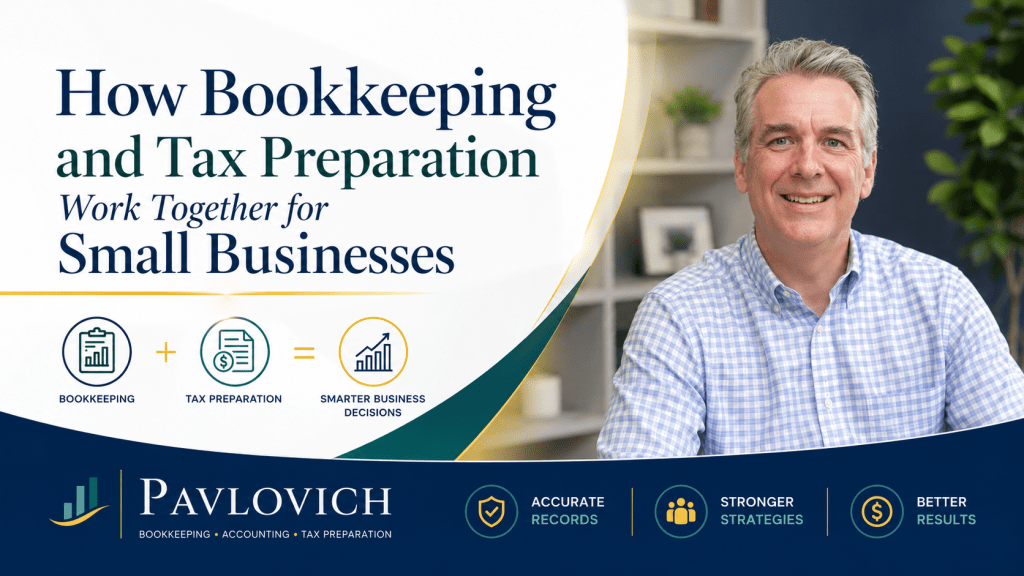
Bookkeeping and tax preparation serve different purposes, but they work best as part of the same financial process. Bookkeeping helps taxes by making it easier to track income and expenses and stay organised for filing. Bookkeeping organizes what happened in your business throughout the year. Tax preparation uses that information to complete the appropriate returns and supporting forms.
For small business owners, the connection matters well beyond filing a return. Current books help you understand your income, expenses, cash flow, account balances, and overall financial position before tax season begins.
Instead of sorting through a year of scattered transactions under pressure, you can work from organized records that already tell the story of your business.
Bookkeeping Creates the Foundation for Tax Preparation
Bookkeeping records and organizes your business activity. Depending on your situation, that work may include:
- Categorizing income and expenses
- Reconciling bank and credit card accounts
- Recording loans and owner transactions
- Reviewing payment processor activity
- Organizing supporting documents
- Preparing financial statements
- Identifying transactions that need clarification
Tax preparation begins with those records. Your tax preparer reviews the information, determines which forms apply, addresses tax-specific questions, and prepares the return.
For example, sole proprietors generally report business income and expenses on Schedule C. The numbers entered on that form should connect to the financial records behind them. (IRS)
Clean books do not replace tax preparation. Instead, they give the tax preparer a clearer and more dependable starting point.
Accurate Income Records Matter More Than Bank Deposits
Income may look straightforward when money arrives in your bank account. However, the deposit amount does not always equal the revenue your business earned.
A contractor, consultant, cleaning company, or online seller might receive payments through:
- Checks
- ACH transfers
- Credit and debit cards
- Payment apps
- Online marketplaces
- Cash
- Merchant service providers
Some processors subtract fees before depositing the money. Others combine several customer payments into one deposit. Refunds, chargebacks, sales tax, tips, reimbursements, and transfers can make the activity even harder to interpret.
Monthly bookkeeping separates these details. As a result, your financial reports can show gross income, processing fees, refunds, and other activity more accurately instead of treating every deposit as revenue.
Form 1099-K creates another reason to maintain complete records. The form reports certain payments processed through payment cards, payment apps, and online marketplaces. The IRS instructs taxpayers to use Form 1099-K with their other records when determining and reporting taxable income. (IRS)
Bookkeeping helps you compare the form with your actual business activity. That comparison can reveal fees, shared payments, personal transfers, refunds, or reporting differences that require further review.
Clear Expense Records Reduce Tax-Time Questions
A bank statement proves that money left an account. It does not necessarily explain what you purchased, who benefited from the purchase, or why the expense related to your business.
Consider a landscaping company that spends $450 at a home improvement store. That purchase might include job materials, hand tools, safety equipment, cleaning supplies, and an item for the owner’s home. Recording the entire amount under one general category would hide important details.
Similar problems arise with:
- Mixed Amazon orders
- Gas station purchases
- Travel receipts
- Warehouse club purchases
- Restaurant charges
- Software bundles
- Mobile phone bills
- Personal cards used for business expenses
Receipts, invoices, account statements, payment notes, and other supporting documents help explain what each transaction represents. The IRS states that business records must support the income and deductions reported on a return. (IRS)
Reviewing expenses each month also gives you a better chance of remembering the business purpose. Waiting until tax season often turns an ordinary purchase into a mystery transaction from nine months earlier.
Reconciliations Help You Trust the Numbers
Connecting a bank account to QuickBooks can save time, but downloaded transactions do not automatically create accurate books.
A bank feed brings activity into the software. Reconciliation compares the bookkeeping records with the actual bank or credit card statement to confirm that the balances and transactions match.
This process can uncover:
- Missing transactions
- Duplicate entries
- Incorrect transfers
- Deleted transactions
- Old uncleared checks
- Incorrect beginning balances
- Charges posted to the wrong account
- Payments recorded more than once
QuickBooks describes reconciliation as matching the transactions in the accounting system with bank and credit card statements. Intuit also recommends categorizing and matching downloaded transactions before completing the reconciliation. (QuickBooks)
Without reconciled accounts, a profit and loss statement may appear complete while still containing errors. Reconciliation gives your financial reports a stronger foundation and helps your tax preparer begin with fewer unresolved differences.
Financial Reports Provide More Than Tax Totals
Tax preparation focuses on filing requirements. Financial reporting helps you understand the business throughout the year.
A profit and loss statement can show whether revenue increased, operating expenses changed, or profitability moved in the wrong direction. A balance sheet provides information about assets, liabilities, and owner equity. Cash flow reporting helps explain why a profitable business may still feel short on cash.
Together, these reports can help you answer questions such as:
- Is the business earning more than it did last year?
- Which expenses have increased?
- Are customers paying on time?
- How much does the business owe?
- Can the business cover upcoming bills?
- Are current prices supporting a reasonable margin?
- Does the business have enough cash for a large purchase?
Those questions matter even when tax season is months away.
Bookkeeping creates the records. Accounting support and financial reporting help turn those records into useful information. Tax preparation then uses organized year-end figures as part of the filing process.
Current Books Support Better Tax Conversations
Many self-employed business owners need to discuss estimated tax payments during the year. Those conversations become more useful when the financial information reflects what the business has actually earned.
The IRS generally requires individuals to consider estimated payments when they expect to owe at least $1,000 after subtracting withholding and refundable credits, subject to additional requirements. (IRS)
Bookkeeping does not determine your tax strategy or replace advice from a qualified tax professional. However, current financial reports can give that professional better information.
For example, a consultant may have earned considerably more during the first six months of the year than during the same period last year. A current profit and loss statement can make that change visible. Without updated books, the discussion might rely on outdated figures, rough estimates, or bank balances that do not show the full picture.
Organized Records Help Support the Tax Return
A profit and loss statement rarely contains every document needed for tax preparation. Depending on the business, your tax preparer may also request:
- Bank and credit card statements
- Receipts and vendor invoices
- Payroll reports
- Contractor payment records
- Forms W-9 and 1099
- Loan statements and interest information
- Asset purchase details
- Mileage records
- Estimated tax payment confirmations
- Prior-year tax returns
- Year-end tax forms
- Information about owner contributions or withdrawals
The IRS allows businesses to choose a recordkeeping system that suits their needs, but that system must clearly show income and expenses. Business books should also summarize transactions and support reported deductions and credits. (IRS)
A consistent monthly process keeps those records from spreading across email accounts, bank portals, filing cabinets, vehicles, and piles of paper.
Catch-Up Bookkeeping Can Help When Records Fall Behind
Not every business reaches tax season with current books. Some owners have several months of uncategorized transactions. Others discover that accounts were never reconciled or that QuickBooks contains duplicate and inaccurate entries.
Falling behind does not mean you have failed. Small business owners often prioritize customers, employees, projects, and daily operations until bookkeeping becomes difficult to manage.
Catch-up bookkeeping can help bring overdue records up to date. The process may include:
- Reviewing the current bookkeeping file
- Gathering missing statements and documents
- Categorizing past transactions
- Separating transfers, loans, and owner activity
- Reconciling bank and credit card accounts
- Addressing unclear or inconsistent entries
- Preparing more dependable financial reports
- Organizing the books for tax preparation
Bookkeeping cleanup may also be necessary when records exist but contain significant errors. After the catch-up or cleanup work, monthly bookkeeping can help prevent the same situation from developing again.
Bookkeepers, Tax Preparers, and CPAs Have Different Roles
A small business may work with more than one financial professional.
A bookkeeper maintains and organizes the ongoing financial records. An accounting support provider may also prepare reports, review financial activity, and help the owner understand what the numbers show.
A tax preparer uses financial records and tax documents to prepare the applicable return. Meanwhile, a CPA may become appropriate for audits, attest services, complex entity structures, specialized tax matters, or situations requiring CPA-level services.
These roles can complement each other. Organized bookkeeping can make the tax preparer’s or CPA’s work more efficient, while tax-related questions can identify details that the bookkeeping process should track more clearly in the future.
Pavlovich Bookkeeping & Accounting is not a CPA firm. We provide bookkeeping, accounting support, financial reporting, QuickBooks assistance, tax-ready records, and tax preparation for qualifying personal and simple small business situations. More complex matters may require a CPA or specialized tax professional.
How to Make Tax Preparation Easier Throughout the Year
A smoother tax season usually starts long before you receive your first year-end tax form.
Small business owners can create a stronger process by:
- Keeping business and personal accounts separate
- Reviewing transactions every month
- Saving receipts and invoices in an organized system
- Adding notes to unusual purchases and deposits
- Reconciling bank and credit card accounts regularly
- Tracking loans, owner contributions, and withdrawals separately
- Reviewing financial reports throughout the year
- Keeping contractor and payroll records current
- Addressing unclear transactions before the details become difficult to remember
- Asking tax-specific questions before year-end when possible
Consistency matters more than creating a complicated system. A simple monthly routine usually provides more useful information than a detailed process that no one maintains.
Better Tax Preparation Begins With Better Financial Records
Bookkeeping and tax preparation should not feel like unrelated services. One creates the financial record, while the other uses that record to complete the tax return.
More importantly, organized bookkeeping helps you understand your business before tax season arrives. Current records give you clearer financial reports, support more productive conversations with tax professionals, and reduce the number of unanswered questions waiting at year-end.
Whether your books are current, several months behind, or difficult to trust, the next step begins with understanding their present condition.
Need help organizing your records and preparing for tax season? Schedule a consultation with Pavlovich Bookkeeping & Accounting to discuss your bookkeeping, accounting support, financial reporting, QuickBooks, or small business tax preparation needs.