Key Takeaways
- Gather all personal tax documents before filing, including W-2s, 1099s, and other income forms.
- Check for Marketplace health insurance forms like 1095-A, and gather proof of deductions and credits.
- Remember to include dependent information and childcare provider details for tax benefits.
- Keep prior-year tax returns handy to provide context for your current filing process.
- Organized personal tax documents simplify tax preparation and enhance accuracy during filing.
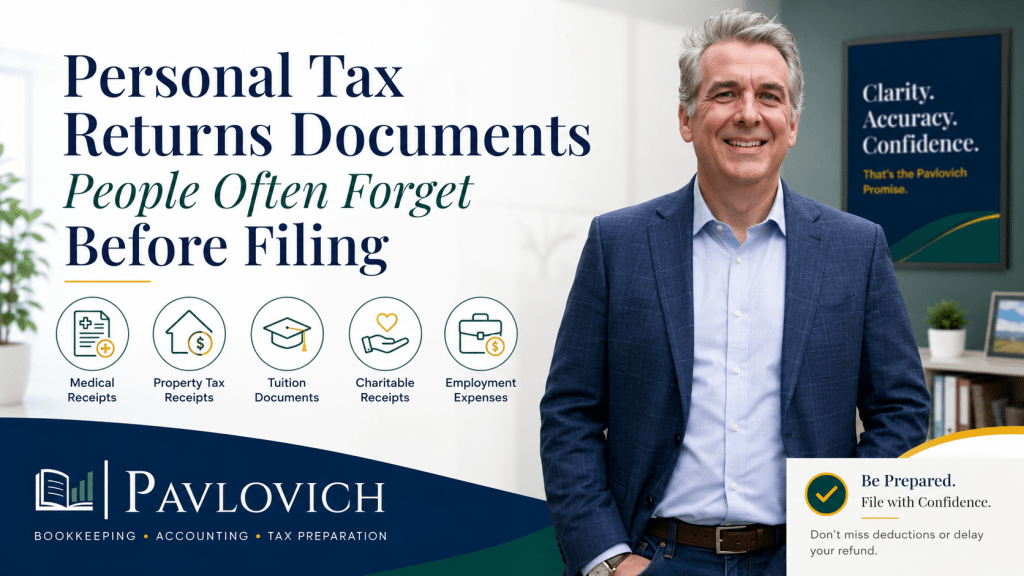
Tax preparation gets easier when you gather your documents before you file. Most people remember their main W-2, mortgage interest form, or student loan interest statement. However, many tax-time delays start with smaller details, such as bank interest, Marketplace health insurance forms, childcare provider information, dependent records, tax notices, or last year’s return.
Personal tax returns need a complete financial picture. The IRS encourages taxpayers to keep tax forms and supporting records in one place so they can prepare an accurate return, claim deductions or credits, and avoid errors that may delay a refund. (IRS)
Pavlovich Bookkeeping Co. offers personal tax preparation for individuals and families who want organized tax documents, clear communication, and practical tax-time support. We also help sole proprietors, small LLCs, and similar simple small businesses with limited small business tax preparation when the situation fits our services.
Start With Every Income Form, Not Just Your Main W-2
A W-2 from your employer usually starts the tax document folder, but it may not tell the whole story. Many individuals receive more than one income form during the year, especially after a job change, part-time work, freelance project, bank account bonus, retirement distribution, or unemployment claim.
The IRS says taxpayers should gather records such as W-2s, 1099s, receipts, canceled checks, and other documents that support income, deductions, or credits reported on a tax return. (IRS)
Common income documents people forget include:
W-2 forms from every employer, including short-term, seasonal, or part-time jobs.
1099-INT forms for bank interest.
1099-DIV forms for dividends.
1099-B forms for investment sales.
1099-R forms for retirement plan or IRA distributions.
SSA-1099 forms for Social Security benefits.
1099-G forms for unemployment compensation or certain state payments.
1099-NEC or 1099-MISC forms for freelance, contract, or side income.
1099-K forms for payment apps, online marketplaces, or card payment activity.
Records of digital asset transactions.
Small income amounts still matter. A savings account that earned a few dollars of interest, a brokerage account you rarely check, or one side job payment can still create a tax document. Because the IRS may also receive copies of information returns, your tax preparer needs the full set before filing.
Check for Marketplace Health Insurance Documents
Marketplace health insurance forms often create tax-time confusion. If you, your spouse, or someone in your household had coverage through the Health Insurance Marketplace, look for Form 1095-A before you file.
The IRS says taxpayers who purchased coverage through the Marketplace should wait to receive Form 1095-A before filing their tax return. (IRS) HealthCare.gov also explains that Form 1095-A includes Marketplace insurance details and helps taxpayers complete Form 8962, Premium Tax Credit. (HealthCare.gov)
Do not overlook this form if Marketplace coverage lasted only part of the year. A job change, marriage, divorce, birth of a child, move, or coverage change can also create more than one Form 1095-A.
Before sending the form to your tax preparer, review:
Names listed on the form.
Months of coverage.
Household members covered.
Premium amounts.
Advance premium tax credit information.
Forms 1095-B and 1095-C may also arrive from an insurance provider or employer. These forms may not always require the same filing steps as Form 1095-A, but you should still keep them with your tax records.
Gather Deduction and Credit Records Before Your Appointment
Many taxpayers remember that they paid for something that might affect their personal tax return, but they forget to gather the proof. Your tax preparer needs details, not guesses.
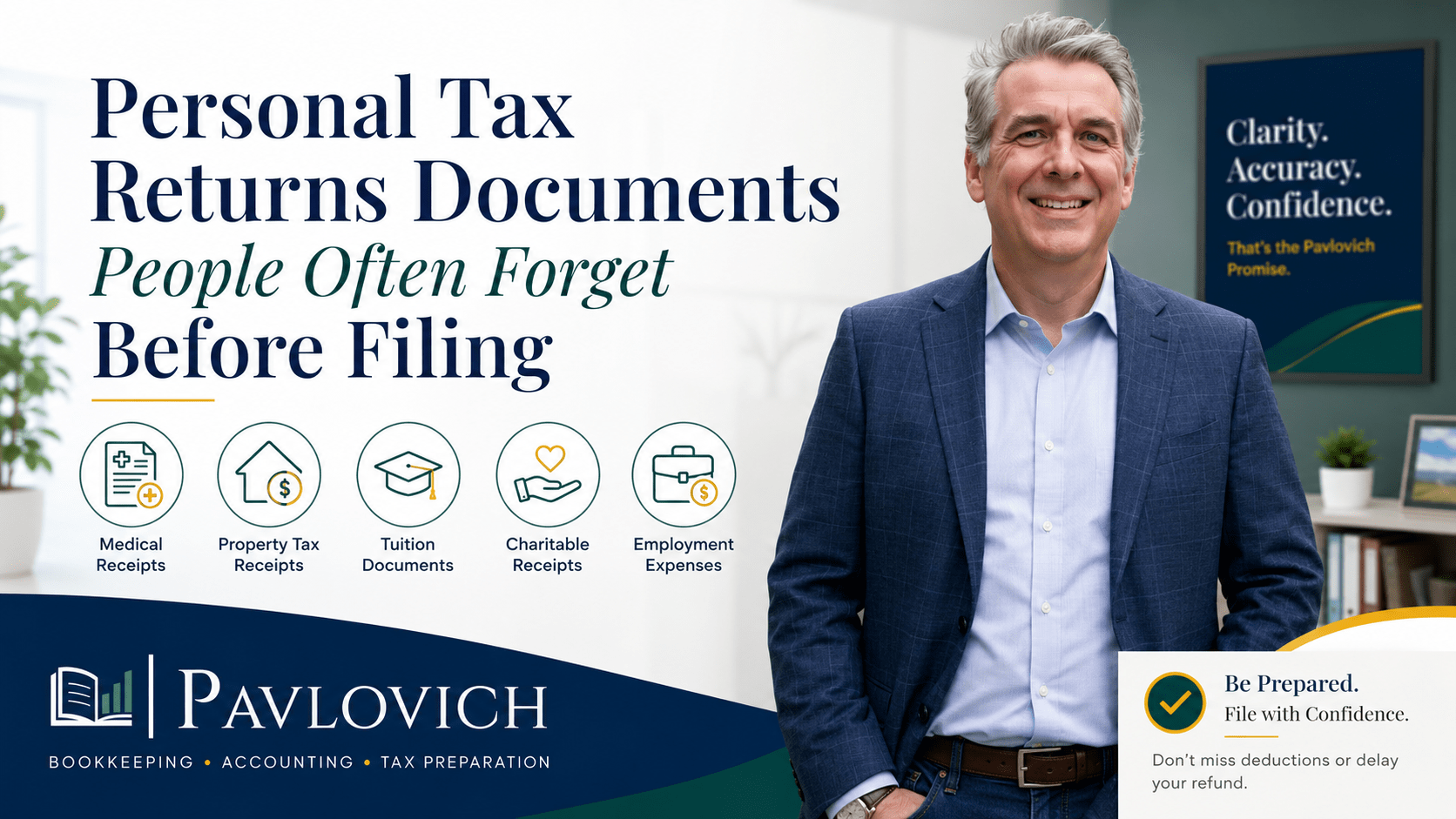
Commonly missed deduction and credit records include:
Mortgage interest statements, usually Form 1098.
Property tax records.
Charitable giving receipts.
Medical and dental expense records.
Health savings account forms and contribution records.
Student loan interest statements.
Tuition statements, usually Form 1098-T.
Educator expense records.
Retirement contribution records.
Energy credit documentation, when applicable.
Adoption-related records, when applicable.
You do not need to bring every household receipt to your appointment. However, you do need records that support the items you want reviewed on your return. A clean tax folder with year-end statements, receipts, confirmations, and letters helps your tax preparer work through your information with fewer follow-up questions.
Do Not Forget Childcare and Dependent Information
Dependent information can affect filing status, credits, education benefits, and childcare-related items. Families often remember a child’s basic information, but they may forget the exact childcare details needed for tax preparation.
If you plan to review the Child and Dependent Care Credit, gather the provider’s information before your appointment. The IRS says taxpayers must identify the care provider on Form 2441, including the provider’s name, address, and taxpayer identification number. (IRS)
Before personal tax preparation, gather:
Each dependent’s full legal name.
Each dependent’s Social Security number or ITIN.
Each dependent’s date of birth.
School or residency details, when relevant.
Childcare provider name.
Childcare provider address.
Childcare provider tax identification number.
Total paid to each childcare provider.
Records for before-school care, after-school care, or day camp, when relevant.
Separated or divorced parents may need extra documentation. Bring any relevant custody agreements, Form 8332 releases, or written agreements about who may claim a child. Your tax preparer can review the records and explain what information they need to complete the return accurately. However, complex dependency questions may require support from a CPA, attorney, or specialized tax professional.
Bring Last Year’s Tax Return
A prior-year tax return gives your tax preparer a helpful starting point. It can show filing status, dependents, prior addresses, carryforward items, depreciation schedules, estimated tax payments, refund application choices, and state tax details.
Prior-year information can also help with e-filing. The IRS says taxpayers can use an IRS Online Account to view or download key details from tax returns filed in the last five years, including adjusted gross income. Taxpayers can also view certain W-2 and 1099 information, IRS digital notices, tax owed, and payments made. (IRS)
Gather these prior-year items when you have them:
Last year’s federal tax return.
Last year’s state tax return.
Any carryforward worksheets.
Any depreciation schedules.
Prior-year IRS or state tax notices.
Estimated tax payment confirmations.
Last year’s adjusted gross income.
Identity Protection PIN letter, if the IRS issued one.
A prior-year return matters even more when you change tax preparers. It helps the new preparer understand what changed and reduces the chance that a recurring item gets missed.
Save IRS Notices, State Notices, and Payment Records
People often focus on income and deductions, but notices and payment records also matter. If you received a letter from the IRS or your state tax agency, bring it to your appointment. Even a notice that seems unrelated may explain payments, adjustments, identity verification issues, or prior-year activity.
Also gather:
Estimated tax payment records.
Extension payment confirmations.
Prior-year refund amounts applied to the current year.
IRS notices.
State tax notices.
Current mailing address.
Direct deposit information.
Driver’s license or state ID information, when requested for e-filing.
For direct deposit, bring your bank routing number and account number. A blank check or banking document can help prevent typing errors.
Review Online Portals Before You Assume a Form Is Missing
Some tax documents no longer arrive by regular mail. Employers, banks, brokerage firms, student loan servicers, colleges, and Marketplace health insurance accounts often provide documents through online portals.
Before you file, check:
Employer payroll portals.
Bank websites.
Brokerage accounts.
Student loan servicer accounts.
College or university portals.
Marketplace health insurance accounts.
State unemployment accounts.
Payment app accounts.
Email folders for electronic delivery notices.
If a W-2 or 1099 has not arrived, do not rush to file without it. Start by checking the issuing portal or contacting the employer, payer, financial institution, or agency. Filing too early can create more work later because a missing form may lead to an amended return, IRS notice, delayed processing, or extra follow-up.
Keep Side Income and Small Business Records Separate
Personal tax returns sometimes include side income, freelance work, or small business activity. If you earned money from contract work, gig work, payment apps, online sales, or self-employment, gather more than your 1099 forms.
The IRS explains that gig economy income must appear on a tax return even if the income came from part-time, temporary, or side work, even if you did not receive an information return, and even if you received payment in cash, property, goods, or virtual currency. (IRS)
For side income or small business activity, gather:
1099-NEC, 1099-MISC, and 1099-K forms.
Payment app statements.
Bank statements connected to business activity.
Invoices and sales records.
Expense receipts.
Mileage records, when relevant.
Estimated tax payment confirmations.
Business loan or equipment purchase records.
Home office records, when relevant.
For sole proprietors and small LLC owners, organized records make tax-time conversations much easier. Clean books help separate income, expenses, owner payments, reimbursements, and business records from personal spending.
Pavlovich Bookkeeping Co. helps small business owners with monthly bookkeeping, catch-up bookkeeping, QuickBooks setup, and tax-ready books. We also offer limited small business tax preparation for sole proprietors, small LLCs, and similar simple small businesses. If your tax situation involves more complex business activity, we can help you determine whether it fits our services or whether you may need support from a CPA or specialized tax professional.
Use a Simple Personal Tax Document Checklist
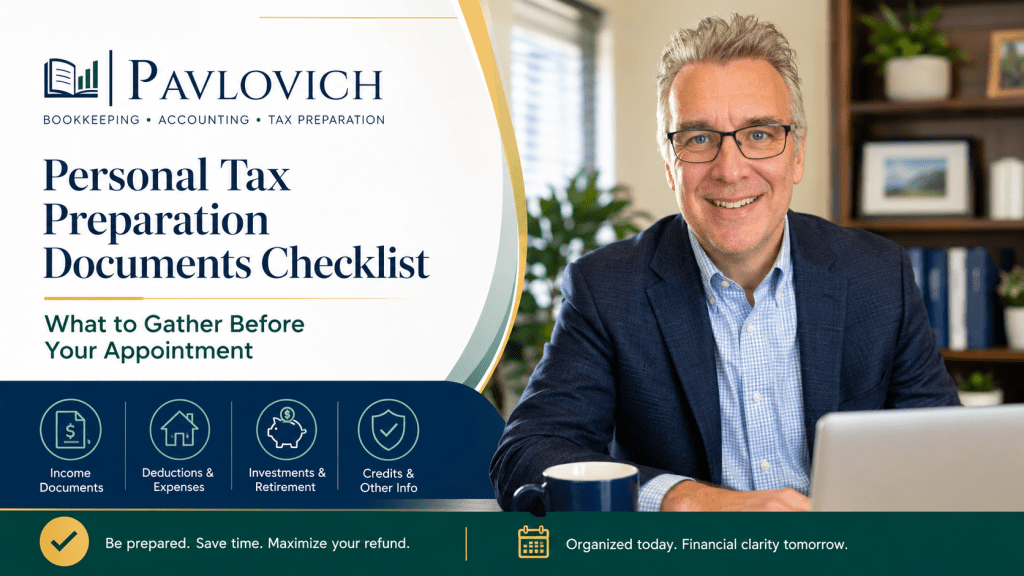
A simple checklist can prevent a lot of tax-time stress. Before your appointment, gather these records in one folder.
Income forms: W-2s, 1099s, SSA-1099, 1099-R, 1099-INT, 1099-DIV, 1099-B, 1099-G, 1099-NEC, 1099-MISC, and 1099-K.
Health insurance records: Form 1095-A for Marketplace coverage, plus other health coverage forms or records when relevant.
Deduction and credit records: Mortgage interest, property taxes, charitable gifts, medical records, student loan interest, tuition forms, retirement contributions, HSA forms, childcare records, and energy credit documentation.
Dependent information: Full legal names, Social Security numbers or ITINs, birth dates, childcare provider details, and custody or release forms when relevant.
Prior-year records: Last year’s federal and state returns, IRS or state notices, carryforward schedules, prior-year AGI, and IP PIN letter if issued.
Payment and banking records: Estimated tax payments, extension payments, direct deposit details, current address, and identification details.
Side income or small business records: 1099s, income records, expense records, mileage logs, payment app statements, bank statements, and estimated tax payment confirmations.
Organized Documents Make Personal Tax Preparation Easier
Personal tax preparation works best when you gather the full story before filing. You do not need a complicated system. You need a complete set of income forms, deduction records, dependent information, health insurance documents, prior-year returns, tax notices, and payment records.
A single folder can make a big difference. As each form arrives, save it in the same place. Then, before your appointment, review your online portals and compare your current documents with last year’s return.
Pavlovich Bookkeeping Co. helps individuals and families approach tax time with organized records, clear communication, and practical support. If your documents feel scattered, start with one folder and gather each missing piece before you file.
Ready to make tax season feel more organized? Ask Pavlovich Bookkeeping Co. about personal tax preparation and tax-time support.