Key Takeaways
- Understanding bookkeeping terms helps small business owners review financial reports effectively.
- Key terms include revenue, income, expenses, assets, liabilities, and equity, which clarify financial statements.
- Accounts receivable and accounts payable are crucial for managing cash flow, representing money owed to and by the business.
- Reconciliation, categorization, and closing the books ensure accuracy in financial reporting.
- Small business owners should feel comfortable asking their bookkeeper for clarification on any confusing terms.
Small business bookkeeping gets easier when you understand the basic language behind your reports. You do not need to become an accountant, but you should know what common bookkeeping terms mean so you can review your books with more confidence, ask better questions, and spot issues before they turn into bigger problems.
The U.S. Small Business Administration also offers a helpful Glossary of Business Financial Terms for business owners who want a reliable reference for financial language. (Small Business Administration)
Why Bookkeeping Terms Matter
Bookkeeping terms matter because they help you understand what your numbers actually say.
When your bookkeeper talks about reconciliation, accounts payable, equity, or categorization, those words connect directly to your financial reports. If you understand the basics, you can review your Profit and Loss statement, Balance Sheet, and cash flow information with more clarity.
Good bookkeeping does more than record transactions. It helps you see where money came from, where it went, what your business owns, what it owes, and whether your records line up with your bank and credit card activity.
Income vs. Revenue
Many business owners use “income” and “revenue” interchangeably, but they can mean different things depending on the report.
Revenue usually means the money your business earns from selling products or services before expenses. For example, if you invoice a client $3,000 for a completed project, that amount counts as revenue.
Income can mean different things depending on context. Sometimes people use it to mean revenue. In financial reporting, income often refers to what remains after subtracting expenses. That is why you may see terms like gross income, net income, or operating income.
A plain-English way to think about it:
Revenue is what your business brings in. Net income is what remains after expenses.
Expenses, Assets, Liabilities, and Equity
These four terms show up often in bookkeeping and financial reports.
Expenses are the costs your business pays to operate. Common examples include software subscriptions, supplies, advertising, insurance, contractor payments, merchant fees, rent, and utilities.
Assets are things your business owns or controls that have value. This may include bank balances, equipment, vehicles, inventory, computers, furniture, or money customers owe you.
Liabilities are amounts your business owes. Loans, credit card balances, unpaid bills, sales tax payable, and payroll-related obligations can all fall under liabilities.
Equity represents the owner’s financial interest in the business. In a small business, equity can include owner contributions, owner draws, retained earnings, and current profit or loss.
These terms matter most when you review your Balance Sheet. The Balance Sheet shows what your business owns, what it owes, and what remains for the owner.
Accounts Receivable vs. Accounts Payable
Accounts receivable and accounts payable sound similar, but they mean opposite things.
Accounts receivable, often called A/R, means money customers owe your business. If you send an invoice and the customer has not paid yet, that unpaid invoice belongs in accounts receivable.
Accounts payable, often called A/P, means money your business owes to others. If a vendor sends you a bill and you have not paid it yet, that bill belongs in accounts payable.
Here is the simple difference:
Accounts receivable means customers owe you money. Accounts payable means you owe someone else money.
These terms matter because unpaid invoices and unpaid bills affect cash flow. Your business may show strong sales but still feel tight on cash if customers pay late or if large bills come due at the same time.
Reconciliation, Categorization, and Closing the Books
Three bookkeeping terms often come up during monthly bookkeeping: reconciliation, categorization, and closing the books.
Reconciliation means your bookkeeper compares the activity in your bookkeeping system to your bank, credit card, loan, or payment processor statements. The goal is to make sure the records match. Reconciliation helps catch duplicates, missing transactions, bank errors, uncleared checks, and incorrect balances.
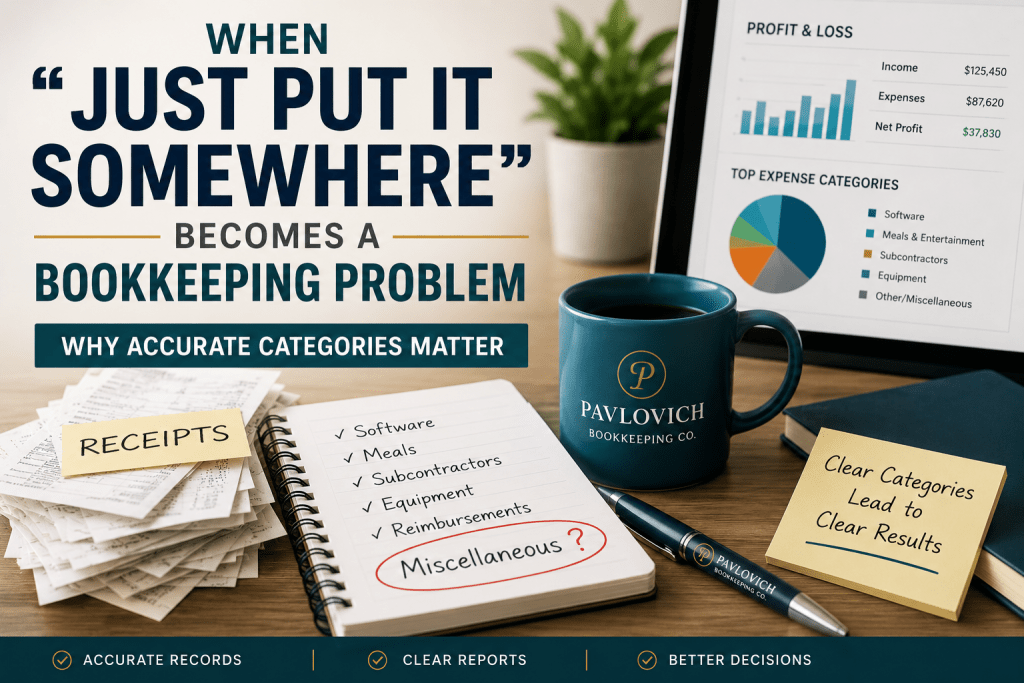
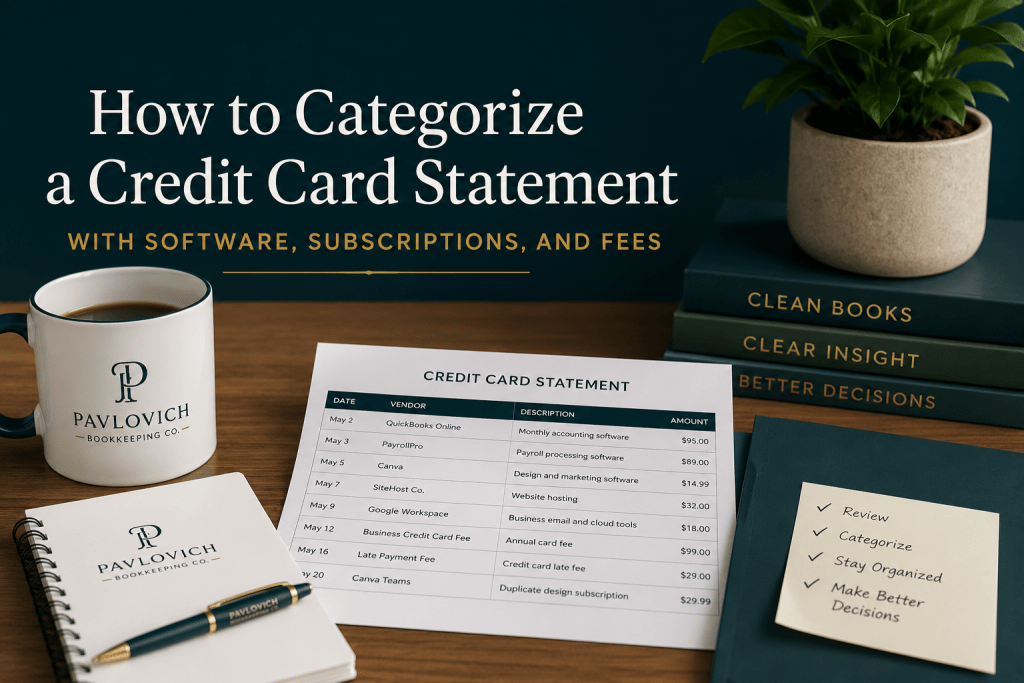
Categorization means assigning each transaction to the right income, expense, asset, liability, or equity account. For example, a software subscription should go to a software or subscriptions category, not office supplies. Accurate categorization makes your reports more useful.
Closing the books means finishing the bookkeeping for a specific period, such as a month. Before you rely on reports, your bookkeeper should review transactions, reconcile accounts, check for missing information, and make sure the reports look reasonable.
When someone says, “the books are closed for May,” they generally mean the bookkeeping for May has been reviewed and completed.
What These Terms Mean When Reviewing Reports
Bookkeeping terms matter most when you look at your financial reports.
On your Profit and Loss statement, you will see revenue, income, and expenses. This report helps you understand whether your business made or lost money during a specific period.
On your Balance Sheet, you will see assets, liabilities, and equity. This report helps you understand what your business owns, what it owes, and how the owner’s interest appears in the books.
In your Accounts Receivable report, you can see which customers owe money and how long invoices have remained unpaid.
In your Accounts Payable report, you can see which bills your business still needs to pay.
When your accounts have been reconciled and your transactions have been categorized correctly, these reports become much more reliable. When reconciliation or categorization falls behind, the reports may not tell the full story.
When to Ask Your Bookkeeper for Clarification
You do not need to understand every technical detail in your bookkeeping system. You should, however, feel comfortable asking questions.
Ask your bookkeeper for clarification when:
You do not understand a category on your Profit and Loss statement.
A bank balance in your books does not match your actual bank account.
Revenue looks higher or lower than expected.
Expenses appear in the wrong category.
A customer invoice still shows as unpaid even though the customer paid.
A credit card, loan, or payment processor balance looks incorrect.
You are unsure whether a transaction counts as an expense, asset, liability, owner draw, or transfer.
Clear communication helps keep your books accurate. It also helps your bookkeeper understand how your business operates, especially when transactions do not look obvious from the bank feed alone.
Bookkeeping Terms Should Make Your Business Clearer
Bookkeeping language can feel overwhelming at first, but the most important terms connect to practical questions:
What did the business earn?
What did it spend?
What does it own?
What does it owe?
Are the records accurate?
Can you trust the reports?
When your books stay organized, these questions become easier to answer. Clean books also help you prepare better information for your CPA or tax preparer at tax time.
Pavlovich Bookkeeping Co. helps small business owners keep accurate records, understand their monthly reports, and stay organized with reliable bookkeeping support. If your books feel confusing, behind, or hard to trust, schedule a consultation to talk through the next step.