Key Takeaways
- Business expense bookkeeping requires context for transactions to ensure accurate financial records.
- Not every payment counts as a business expense; distinguishing expenses helps shape your financial reports.
- Organized expense records aid in understanding cash flow and preparing for taxes effectively.
- Consistent recordkeeping habits, such as saving receipts and reviewing transactions, enhance bookkeeping accuracy.
- Using a bookkeeper can streamline the process and provide clarity in financial reporting and tax preparation.
A payment leaves your business bank account. Does that automatically make it a business expense?
Not necessarily.
Good bookkeeping does more than record money moving in and out of an account. Each transaction needs enough context to show what happened, why it happened, and where it belongs in your financial records.
That distinction matters because the way you organize expenses affects more than tax preparation. Your bookkeeping also shapes your Profit and Loss statement, influences how you understand cash flow, and helps you see what it actually costs to operate your business.
For small business owners, the goal is not to force every purchase into an expense category. The goal is to maintain organized financial records that help you understand where your business stands and give your tax preparer better information when tax time arrives.
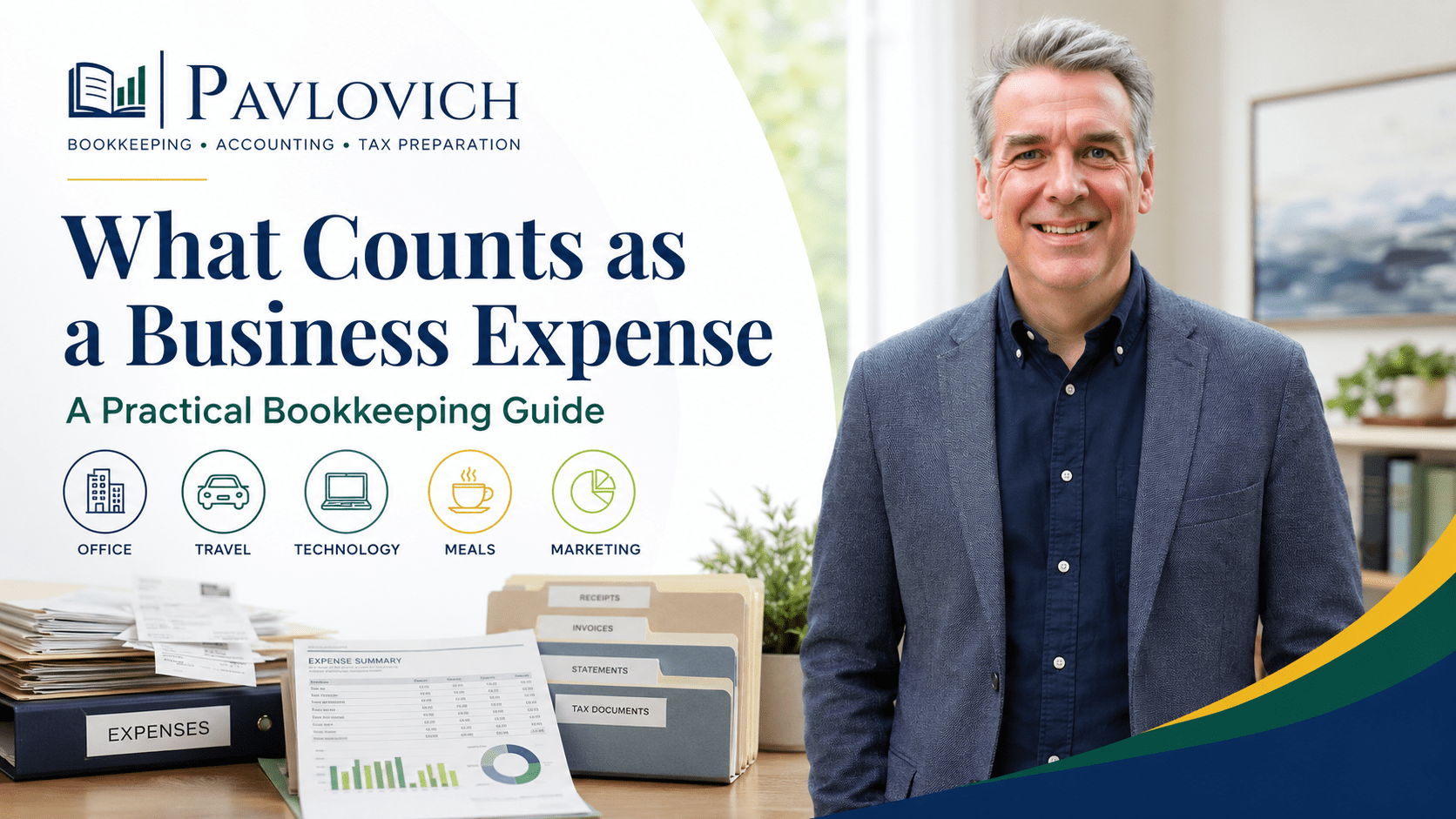
"What Counts as a Business Expense" Bookkeeping Guide
Enter your name and email to receive the one-page worksheet.
Use it to help you:
- Capture the right information for each purchase
- Categorize common business expenses more clearly
- Recognize transactions that may need additional review
- Keep your records organized for reporting and tax preparation
Keep the checklist nearby when reviewing receipts, invoices, credit card charges, and bank transactions. Consistent records can lead to clearer reports and better business decisions.
What Counts as a Business Expense?
For federal tax purposes, the IRS generally describes deductible business expenses as costs that are ordinary and necessary for carrying on a trade or business. An ordinary expense is common and accepted in the business, while a necessary expense is helpful and appropriate. Personal, living, and family expenses generally do not qualify as business expenses. (IRS)
However, bookkeeping and tax treatment are not always the same question.
Your bookkeeper first needs to determine what the transaction represents. Your tax preparer or CPA may then determine how that transaction should be treated on a tax return.
For example, money leaving a business account could represent:
- An ordinary operating expense
- A purchase of equipment or another business asset
- A loan payment
- A credit card payment
- An owner draw or distribution
- A reimbursement
- A transfer between business accounts
- A personal purchase made from a business account
All of these transactions reduce cash, but they do not all belong on the Profit and Loss statement as business expenses.
That is one reason accurate bookkeeping requires more than downloading bank transactions into accounting software.
What Information Should an Expense Record Include?
A useful business expense record should answer several basic questions:
- Who did you pay?
- How much did you pay?
- When did the transaction occur?
- What did you purchase?
- Why did the purchase relate to the business?
- Did the transaction include both business and personal items?
- Does the purchase need additional tax or accounting review?
A bank or credit card transaction may answer the first three questions. It often cannot answer the rest.
Consider a $186 charge from a large retailer. The bank feed may show the vendor name and total amount, but the purchase could include printer paper, cleaning supplies, a computer accessory, food for personal use, or several different items that belong in separate categories.
Without a receipt or note, the transaction tells only part of the story.
Why Business Expense Bookkeeping Matters Beyond Tax Time
Many business owners think about expenses primarily when preparing a tax return. However, organized expense records provide useful information throughout the year.
Your expense categories help shape your Profit and Loss statement. When those categories stay consistent and meaningful, you can use your reports to answer practical questions about the business.
For example:
- Are software and subscription costs increasing?
- How much are you spending on advertising?
- Did job material costs rise this quarter?
- Are merchant processing fees becoming significant?
- Have vehicle or travel costs changed?
- Are recurring subscriptions still useful?
- Did a vendor charge the business twice?
- Is one area of overhead growing faster than expected?
A report cannot answer those questions well when transactions sit in vague categories or when personal purchases, transfers, loan payments, and operating expenses get mixed together.
Bookkeeping creates the records. Financial reporting helps you understand what those records mean.
That connection is important. Clean books should not simply produce a tax return at the end of the year. They should also give you more reliable information about how your business operates.
Common Business Expense Categories
Every business has different reporting needs. A contractor may track materials, subcontractors, equipment, and vehicle costs, while a consultant may spend more on software, professional services, travel, and marketing.
Your chart of accounts should reflect the way your business operates without becoming unnecessarily complicated.
Common expense categories may include:
Advertising and Marketing
This category may include website costs, online advertising, printed materials, sponsorships, promotional items, and other marketing expenses.
Keeping these costs organized can help you understand how much the business spends to attract and communicate with customers.
Office and General Supplies
Paper, postage, printer ink, small office items, and other supplies used during normal business operations may fall into this area.
However, not every purchase from an office supply store automatically belongs in one category. A receipt could include both ordinary supplies and a larger equipment purchase.
Software and Subscriptions
Many small businesses pay monthly or annual fees for accounting software, scheduling tools, cloud storage, email platforms, project management systems, industry-specific applications, and other technology.
Reviewing this category regularly can also help identify subscriptions that the business no longer uses.
Contract Labor and Professional Services
Payments to contractors, attorneys, bookkeepers, consultants, designers, and other service providers may require clear records.
Some payments may also create tax reporting requirements, so your tax preparer should review questions involving forms such as Form 1099.
Insurance
Depending on the business, insurance costs may include general liability coverage, professional liability insurance, workers’ compensation coverage, commercial vehicle insurance, or other policies.
Clear descriptions help distinguish business insurance from personal coverage.
Rent, Utilities, and Facility Costs
Businesses with offices, shops, studios, storage spaces, or other facilities may need to track rent, utilities, cleaning, maintenance, and related costs.
Home-based businesses can involve additional tax rules, so those situations may require review by a tax professional.
Travel, Meals, and Vehicle Costs
These transactions often need more documentation because business and personal activity can overlap.
A restaurant charge, hotel stay, airfare purchase, or fuel transaction does not explain its own business purpose. Notes and supporting records can provide important context, while a tax professional can determine whether a particular cost qualifies for a deduction.
Bank, Merchant, and Payment Processing Fees
Credit card processing fees, payment platform charges, bank service fees, and similar costs can add up.
Tracking them separately may help you better understand the cost of accepting payments and maintaining financial accounts.
Equipment and Larger Purchases
Computers, furniture, machinery, vehicles, tools, and other significant purchases may need different accounting or tax treatment from ordinary operating expenses.
A larger purchase may involve an asset account, depreciation, capitalization, or another treatment rather than a simple expense category. Your bookkeeper can organize the transaction and maintain the supporting records, while your tax preparer or CPA can determine the appropriate tax treatment.
Why Receipts and Supporting Documents Still Matter
A bank feed is useful, but it does not replace supporting documentation.
The IRS identifies documents such as receipts, invoices, paid bills, sales slips, deposit slips, and canceled checks as records that can support entries in a business’s books and tax return. (IRS)
Consider a charge from Amazon.
The vendor name alone does not tell your bookkeeper whether you bought:
- Office supplies
- Job materials
- A computer accessory
- Equipment
- A personal item
- Several different types of items in one order
The same issue can happen with purchases from Costco, Target, Home Depot, a gas station, or another retailer that sells many different products.
A short note can make a transaction much easier to understand:
- “Printer toner for office”
- “Materials for Johnson project”
- “Parking for client meeting”
- “Replacement charger for business laptop”
- “Receipt includes one personal item”
- “Annual scheduling software subscription”
Those details help your bookkeeper organize the transaction more accurately and reduce questions months later.
Mixed Purchases Need More Than One Category
A single receipt does not always equal a single bookkeeping category.
Imagine a contractor spends $425 at a home improvement store. The receipt includes:
- Materials for a customer project
- A replacement hand tool
- Safety equipment
- Cleaning supplies
- One personal item
Categorizing the entire $425 as “supplies” may hide useful information and include a personal purchase in the business expenses.
Instead, the transaction may need to be split among several accounts.
The same principle applies to large online orders, warehouse club purchases, travel receipts, and other mixed transactions. Keeping the original receipt makes those splits much easier to explain.
Why Personal Purchases Create Bookkeeping Problems
Personal purchases made from business accounts do more than create tax questions. They can also make your financial reports harder to understand.
Suppose your business debit card shows a $240 grocery store transaction. Was it:
- Food for a business event?
- Office supplies?
- A personal grocery trip?
- A purchase that included both business and personal items?
Without context, your bookkeeper cannot confidently determine what happened.
Depending on the business structure and circumstances, a personal transaction may need to be recorded as an owner draw, distribution, reimbursement-related transaction, or another equity item rather than a business expense.
The cleanest approach is usually to keep business and personal spending separate. The IRS also notes that separate business and personal accounts can make recordkeeping easier. (IRS)
Mistakes still happen, of course. When they do, identify the personal portion clearly instead of hiding it inside an expense category.
Not Every Payment Is an Expense
One of the most important bookkeeping concepts for business owners is that cash leaving the account does not automatically mean the business incurred an expense.
Credit Card Payments
When you use a business credit card, the individual purchases may create expenses or other transactions.
Paying the credit card bill later generally reduces the credit card balance. Recording both the purchases and the payment as expenses could double-count your costs.
Loan Payments
A loan payment may include both principal and interest.
The principal portion reduces a liability on the Balance Sheet. Interest may receive different accounting treatment.
Recording the entire payment as one expense can distort your Profit and Loss statement.
Transfers Between Accounts
Moving money from business checking to business savings changes where the cash sits. It does not automatically create an expense.
Owner Draws or Distributions
Money that an owner takes from the business for personal use may affect an equity account rather than an operating expense category.
Equipment Purchases
A significant equipment purchase may create a business asset instead of appearing entirely as a current operating expense.
These distinctions are why reconciliation and review matter. Accounting software may import the transaction, but someone still needs to determine what the transaction actually represents.
How Expense Categories Affect Your Financial Reports
Expense categorization should help create useful financial information.
Suppose a landscaping company records equipment repairs, fuel, subcontractor payments, advertising, insurance, and software in one broad category called “Business Expenses.”
The total may be mathematically correct, but the report provides little insight.
A more organized Profit and Loss statement can help the owner see:
- What it costs to perform customer work
- How much overhead the business carries
- Which costs are increasing
- Whether certain expenses fluctuate seasonally
- Where additional review may be needed
That does not mean every purchase needs its own account. Too many categories can make reports difficult to read.
The goal is a practical structure that gives the business owner useful information without creating unnecessary complexity.
Monthly Bookkeeping Helps Keep Expense Records Reliable
Waiting until tax season to review a year of transactions creates a predictable problem: the details become harder to remember.
A charge that seems obvious today may be difficult to explain eight months from now.
Monthly bookkeeping creates a regular process for reviewing activity while the information is still relatively fresh.
That process may include:
- Reviewing bank and credit card transactions
- Collecting missing receipts and invoices
- Clarifying unusual or mixed purchases
- Categorizing transactions consistently
- Reconciling bank and credit card accounts
- Reviewing uncategorized or questionable activity
- Preparing financial reports
- Looking for unusual changes that may need further explanation
The reconciliation step is especially important. It compares the bookkeeping records with the actual account activity so missing, duplicated, or incorrectly recorded transactions can be investigated.
Once the books are organized, financial reporting becomes more useful. Instead of seeing a collection of bank transactions, you can review your business activity in a more meaningful way.
What a Bookkeeper Can Help Organize
A bookkeeper can help create consistency in your financial records.
Depending on the engagement, that support may include:
- Organizing and categorizing transactions
- Reconciling bank and credit card accounts
- Reviewing unclear vendor activity
- Identifying missing information
- Separating obvious personal transactions from business activity
- Maintaining a practical chart of accounts
- Reviewing recurring charges
- Organizing supporting documentation
- Preparing monthly financial reports
- Helping keep records ready for tax preparation
The value goes beyond entering transactions.
Reliable bookkeeping creates the foundation for accounting support and financial reporting. Once the records are organized, business owners can spend more time understanding what the numbers say about the business.
What Should Your Tax Preparer or CPA Review?
Bookkeeping organizes the financial activity, but some questions require tax judgment.
A tax preparer or CPA may need to review issues such as:
- Whether a particular purchase qualifies as a deductible business expense
- How a significant equipment purchase should be treated
- Vehicle and mileage questions
- Business travel and meal expenses
- Home office expenses
- Reimbursements
- Payments that may create information-reporting requirements
- Transactions involving more complex business structures
The IRS maintains current business-expense resources and notes that the former Publication 535 was discontinued after its 2022 revision, with topics redirected to current publications and guidance. (IRS)
Pavlovich Bookkeeping & Accounting is not a CPA firm. We provide bookkeeping, accounting support, financial reporting, QuickBooks support, tax-ready financial records, personal tax preparation, and limited small business tax preparation for appropriate situations.
Businesses with complex tax, audit, attestation, or specialized accounting needs may need to work with a CPA or another qualified professional.
Simple Habits That Keep Business Expense Records Organized
A complicated recordkeeping system is not necessarily a better one. Consistency matters more.
A practical routine may include:
- Use dedicated business bank and credit card accounts whenever possible.
- Save receipts and invoices as purchases occur.
- Add short notes to transactions that may not be obvious later.
- Identify mixed business and personal purchases clearly.
- Keep vendor documents in one organized system.
- Review uncategorized transactions regularly.
- Respond to bookkeeping questions while the purchase is still familiar.
- Reconcile bank and credit card accounts every month.
- Review your Profit and Loss statement for unusual changes.
- Ask questions when a transaction or report does not make sense.
The IRS does not require every business to use the same recordkeeping system. Instead, records should clearly support the business’s income and expenses and provide the information needed for its books and tax return. (IRS)
The best system is one your business can use consistently.
Organized Expenses Help You Make Sense of Your Numbers
Business expense bookkeeping is not simply about deciding which category to click in QuickBooks.
Each transaction contributes to a larger financial picture.
When your expense records stay organized, you can better understand what it costs to run the business, review changes in spending, spot transactions that need attention, prepare more useful financial reports, and provide cleaner information at tax time.
That is the connection between bookkeeping and accounting support.
Bookkeeping organizes what happened. Financial reporting helps show what it means.
Pavlovich Bookkeeping & Accounting helps small business owners make sense of their numbers through organized bookkeeping, practical accounting support, clear financial reporting, and tax-ready financial records.
When your expenses feel scattered, your categories no longer make sense, or your financial reports are difficult to trust, schedule a consultation to discuss your current bookkeeping and determine the best place to begin.