Key Takeaways
- Categorizing purchases accurately helps businesses understand spending and improve financial reporting, rather than lumping all Staples purchases into ‘Office Supplies.’
- A Staples receipt can contain various items, requiring attention to detail for proper categorization based on business use.
- Office supplies usually cover regularly used items, while long-lasting equipment and software need separate categories for clarity.
- Clear categorization enables better tracking of specific expenses, assisting in tax preparation and financial reviews by professionals.
- Consistency in categorization aids in reliable month-to-month comparisons, which helps with budgeting and spotting unusual spending patterns.
An Office Supplies Receipt, such as one from Staples, may look like one straightforward business purchase. However, a single trip can include paper, toner, furniture, equipment, mailing materials, cleaning products, and software. It’s also important to understand the distinction between repairs vs improvements for proper record keeping and deductions.
Putting the entire transaction into “Office Supplies” may save a few minutes, but it can also make your financial reports less useful. Better bookkeeping starts by reviewing what the business actually purchased instead of relying only on the vendor name.
Clear categories help small business owners understand their spending, maintain tax-ready records, and give their tax professional better information when a purchase requires additional review.
Why the Store Name Does Not Determine the Category
Bank feeds usually show the vendor, date, and total amount. They do not explain every item included in the purchase.
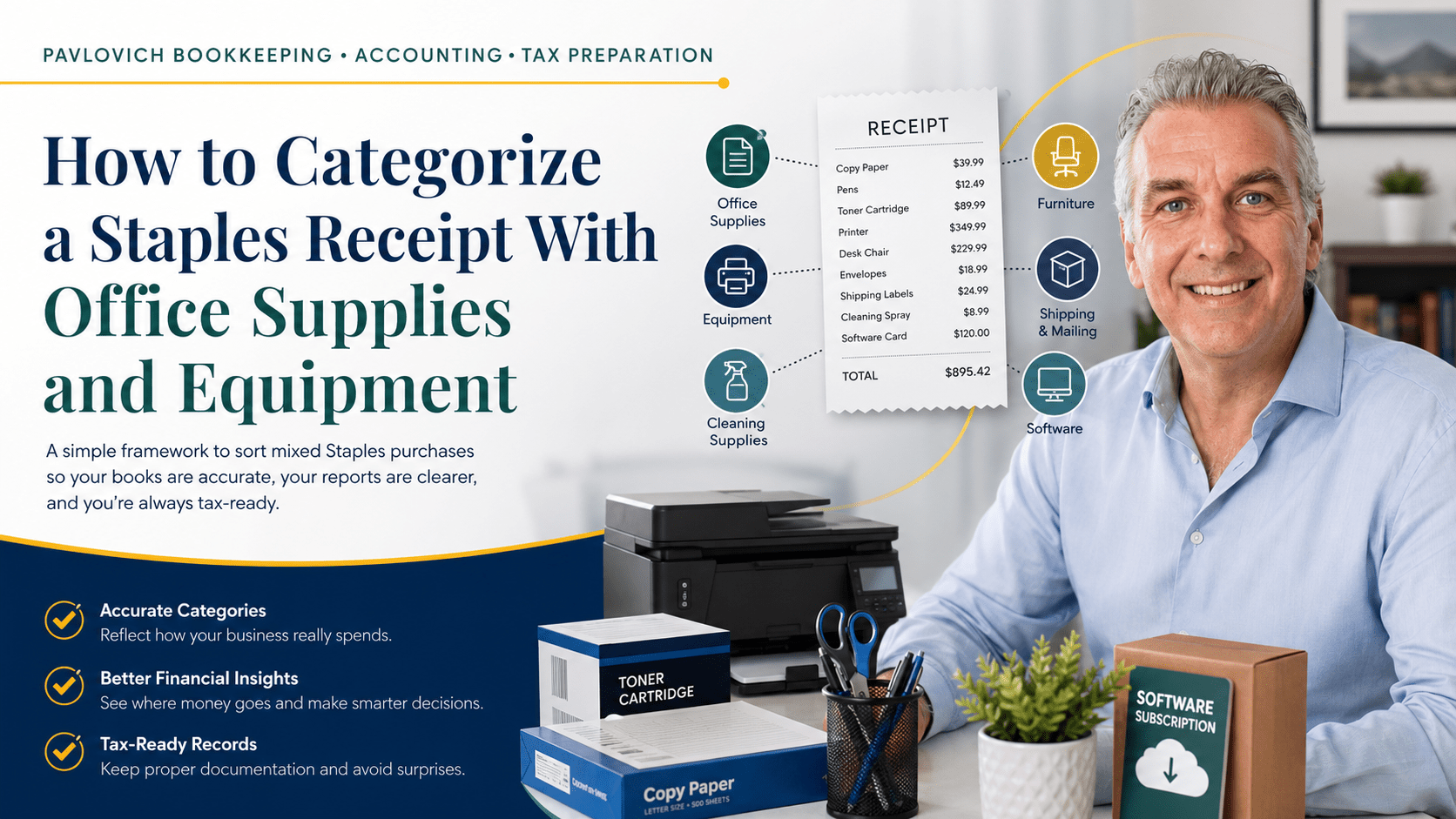
For example, seeing “Staples” in QuickBooks may suggest office supplies. The actual receipt could include:
- Copy paper
- Pens and folders
- Printer toner
- A new printer
- A desk chair
- Shipping labels
- Cleaning products
- A software subscription card
Each item supports the business differently. Therefore, the correct bookkeeping category depends on what the business purchased and how it will use the item.
The IRS identifies receipts, invoices, paid bills, and similar documents as supporting records for entries in a business’s books and tax return. Keeping those documents organized helps show the details behind each transaction. (IRS)
A Sample Staples Receipt
Consider this fictional receipt:
| Item | Example Cost | Possible Bookkeeping Category |
|---|---|---|
| Copy paper | $39.99 | Office Supplies |
| Pens | $12.49 | Office Supplies |
| Toner cartridge | $89.99 | Office Supplies or Printer Supplies |
| Printer | $349.99 | Office Equipment |
| Desk chair | $229.99 | Office Furniture or Office Equipment |
| Envelopes | $18.99 | Office Supplies |
| Shipping labels | $24.99 | Postage and Mailing or Shipping Supplies |
| Cleaning spray | $8.99 | Cleaning Supplies |
| Software subscription card | $120.00 | Software and Subscriptions |
The payment may appear as one transaction in the bank account. Still, the receipt represents several different types of business spending.
You do not need a separate bookkeeping account for every item in the store. Instead, use enough detail to make your financial reports meaningful without creating an unnecessarily complicated chart of accounts.
What Usually Belongs in Office Supplies?
Office supplies generally include routine items that a business uses during normal operations.
Common examples include:
- Paper
- Pens and pencils
- Folders
- Envelopes
- Notebooks
- Sticky notes
- Binder clips
- Staplers and staples
- Desk organizers
- Other small consumable supplies
These items usually get used up, replaced regularly, or have a relatively short useful life.
For many small businesses, one office supplies category works well for everyday purchases. Problems begin when that same account also holds printers, computers, furniture, software, cleaning products, and shipping materials.
A category should help explain spending. When it contains too many unrelated purchases, it stops providing useful information.
Should Printer Ink and Toner Have Their Own Category?
The right answer depends on the business.
A consultant who prints only a few pages each month may place toner and ink in office supplies. Creating another account may not provide much additional value.
However, a business that regularly prints contracts, client packets, labels, marketing materials, invoices, or shipping documents may benefit from a separate printer supplies category.
Tracking printing costs separately can help the owner answer questions such as:
- How much are we spending on printing?
- Have toner costs increased?
- Would a different printer reduce ongoing expenses?
- Are printing costs connected to a particular service or project?
Consistency matters more than choosing a perfect label. Once you decide where printer supplies belong, use the same approach from month to month unless there is a practical reason to update the chart of accounts.
Why Equipment and Furniture Need More Attention
A pack of pens and a new printer do not tell the same financial story.
Office equipment may include:
- Printers
- Scanners
- Monitors
- Computers
- Shredders
- Label makers
- Projectors
- Other tools expected to last beyond routine daily use
Office furniture may include:
- Desks
- Chairs
- Shelving
- Filing cabinets
- Conference tables
- Storage units
Separating these purchases keeps larger, longer-lasting items visible in the financial records. It also allows the business owner and tax professional to identify items that may need further review.
Some business property may qualify for depreciation or another form of tax treatment depending on the item, its cost, how it is used, and the applicable tax rules. IRS Publication 946 covers depreciation for business and income-producing property, including examples involving computers and office furniture. (IRS)
That does not mean every chair, printer, or monitor automatically receives the same tax treatment. Bookkeeping organizes the transaction. A CPA or qualified tax professional should determine how a larger purchase affects the tax return.
How Should You Categorize Software Purchased at Staples?
Office supply stores sometimes sell boxed software, activation codes, subscription cards, antivirus products, or other digital services.
Possible categories may include:
- Software
- Software Subscriptions
- Dues and Subscriptions
- Computer Expenses
- Information Technology Expenses
A recurring software service often fits naturally with other subscriptions. Meanwhile, a one-time software purchase may require a different category depending on the business’s existing chart of accounts.
The description also matters. A generic entry labeled “Staples purchase” gives the owner very little information. A clearer entry, such as “Annual antivirus subscription,” helps explain the purpose of the expense during a later review.
Certain software purchases can raise additional tax questions, especially when the software has a longer useful life or forms part of a larger equipment setup. Keep the receipt and purchase details available so the tax preparer can review the transaction when necessary.
Where Should Postage and Mailing Supplies Go?
A business that regularly mails contracts, invoices, checks, products, samples, or client materials may want a separate Postage and Mailing category.
Possible items include:
- Stamps
- Shipping labels
- Mailing envelopes
- Padded mailers
- Packaging tape
- Postage meter supplies
- Certified-mail materials
Some businesses may combine these costs with shipping expenses. Others may separate postage from packaging supplies.
The best structure depends on how much the business spends and what information the owner needs. A retail shop that ships orders daily may require more detail than a consultant who mails only a few documents each year.
How Should You Categorize Cleaning Products?
Cleaning spray, paper towels, disinfectant, trash bags, and similar items usually do not belong in office supplies simply because they came from Staples.
A Cleaning Supplies or Janitorial Supplies category may provide better information for businesses that maintain an office, studio, shop, clinic, or client-facing workspace.
A home-based business may use some products for both personal and business purposes. In that situation, the owner should document the business purpose and avoid automatically treating the entire household purchase as a business expense.
The category should reflect the actual business use, not merely where the item was purchased.
How to Split a Staples Transaction in QuickBooks
When one receipt contains several types of purchases, you can divide the transaction among multiple categories.
For the fictional receipt above, the split could look like this:
- Office Supplies: copy paper, pens, and envelopes
- Printer Supplies: toner cartridge
- Office Equipment: printer
- Office Furniture: desk chair
- Postage and Mailing: shipping labels
- Cleaning Supplies: cleaning spray
- Software and Subscriptions: software subscription card
The category totals should add up to the full transaction amount, including any sales tax handled within the bookkeeping entry.
When recording the purchase:
- Review the itemized receipt.
- Confirm that every item has a business purpose.
- Group similar purchases together.
- Select categories that match the existing chart of accounts.
- Add a useful description or memo.
- Attach or store the receipt.
- Flag larger or unusual purchases for professional review.
The exact workflow may vary depending on the bookkeeping software and how the business handles sales tax, reimbursements, and mixed-use purchases.
Do You Need a Category for Every Type of Purchase?
No. Too many categories can make bookkeeping harder to maintain and financial reports more difficult to read.
For example, a small business probably does not need separate accounts for pens, folders, notebooks, and paper. One Office Supplies category may provide enough detail.
Additional categories become helpful when:
- The spending is significant.
- The owner wants to monitor it separately.
- The item has a different purpose from routine supplies.
- A larger purchase may require tax review.
- Combining the costs would make reports misleading.
- The business frequently buys that type of item.
The goal is not to create the most detailed chart of accounts possible. Instead, create a structure that clearly explains how the business earns and spends money.
Why Consistent Categories Matter
Consistency makes month-to-month comparisons more reliable.
Suppose toner goes into Office Supplies in January, Printing Expenses in March, and Computer Expenses in May. Even when each choice seems reasonable, inconsistent treatment makes it harder to understand how printing costs changed over time.
A consistent system helps business owners:
- Compare spending from one month to the next
- Review budget changes
- Notice unusual increases
- Prepare clearer financial reports
- Answer questions from a bookkeeper or tax professional
- Keep records ready for tax preparation
Consistency does not mean a category can never change. Sometimes a growing business needs a more detailed chart of accounts. However, those updates should follow a deliberate plan instead of changing transaction by transaction.
How Better Categories Improve Financial Reporting
Bookkeeping should do more than record where money went. It should help the owner understand what happened in the business.
The SBA advises small businesses to maintain proper bookkeeping and develop a basic understanding of business finances. Accurate revenue and expense records support smoother financial management. (Small Business Administration)
When a Staples purchase is categorized clearly, the owner can ask better questions:
- Did routine supply spending increase?
- Did we buy equipment that explains this month’s higher expenses?
- Are software subscriptions becoming more costly?
- Have printing or mailing costs changed?
- Did we purchase furniture that should remain visible in the records?
- Does a larger item need tax review?
Without a receipt, the owner may only see a payment to Staples. With an itemized receipt and organized categories, the transaction becomes useful financial information.
Good records also support accurate financial statements. IRS Publication 583 notes that businesses need records to prepare income statements and balance sheets, monitor progress, track expenses, and support tax return items. (IRS)
What Should a Bookkeeper Review?
A bookkeeper should look beyond the bank-feed description and review the details behind the purchase.
That review may include:
- Confirming the business purpose
- Checking the itemized receipt
- Separating supplies from equipment and furniture
- Identifying software or subscription purchases
- Reviewing postage, shipping, and cleaning items
- Matching categories to the chart of accounts
- Adding useful descriptions
- Keeping documentation organized
- Flagging larger purchases for the tax preparer
A bank feed can make transaction entry faster, but it does not replace the receipt. The financial institution knows which store received the payment. The receipt explains what the business bought.
What If the Receipt Includes Personal Purchases?
Do not categorize personal items as business expenses simply because they appear on the same receipt.
Instead, separate the transaction between:
- Business purchases
- Personal purchases
- Any appropriate owner contribution, owner draw, reimbursement, or other equity-related account
The exact treatment depends on the business structure and who paid for the purchase.
For example, a business owner may buy printer paper for the company and school supplies for a child during the same trip. Only the legitimate business portion belongs in business expense categories.
Keep the full receipt and clearly identify which items relate to the business. That documentation helps explain why only part of the payment appears as an expense.
Should Sales Tax Be Split Between Categories?
Bookkeeping systems may handle sales tax on purchases in different ways.
Some businesses include the applicable sales tax in the cost assigned to each category. Others use a method recommended by their bookkeeper, accountant, or tax professional.
Whatever method the business follows, the category split should equal the complete amount charged to the bank account or credit card.
Avoid forcing the pre-tax item totals to match the payment while leaving the sales tax unexplained. A small difference can cause reconciliation problems later.
What Records Should You Keep?
Keep the itemized receipt rather than relying only on the credit card statement.
A useful record should show:
- Vendor
- Purchase date
- Items purchased
- Amount paid
- Payment method
- Business purpose
- Any notes about mixed personal and business use
Digital copies can work well when they remain readable, organized, and easy to retrieve. You may attach the receipt to the transaction in QuickBooks or store it in a structured document system.
The IRS states that businesses should retain supporting records for items reported as income, deductions, or credits for as long as those records may remain relevant under the applicable limitation period. The exact retention period depends on the transaction and tax situation. (IRS)
Bookkeeping Categories Do Not Replace Tax Advice
A bookkeeping category organizes a purchase. It does not make the final tax determination.
Several factors may affect tax treatment, including:
- The business purpose
- The cost
- The expected useful life
- How the item is used
- The business’s accounting policies
- Available tax elections
- The taxpayer’s specific circumstances
A bookkeeper can make sure a printer, chair, computer, or software purchase remains clearly identified in the records. A CPA or qualified tax professional can determine whether the business should expense, depreciate, capitalize, or otherwise report the item for tax purposes.
Keeping the purchase visible gives that professional better information than burying every office-store transaction in one broad account.
Clear Categories Help You Understand Office Spending
A Staples receipt does not automatically belong in Office Supplies.
Routine paper and pens may fit there, while printers, furniture, software, mailing materials, and cleaning products may need different categories. Reviewing the itemized receipt helps the books reflect what the business actually purchased.
Thoughtful categorization also improves financial reports. Instead of seeing one unexplained office expense, the business owner can understand how much went toward daily supplies, equipment, subscriptions, or other operating needs.
Pavlovich Bookkeeping & Accounting helps small business owners maintain organized records, improve financial reporting, and understand where their business stands. Need help reviewing receipt categories or keeping your monthly books current? Schedule a consultation to discuss your bookkeeping and accounting needs.