
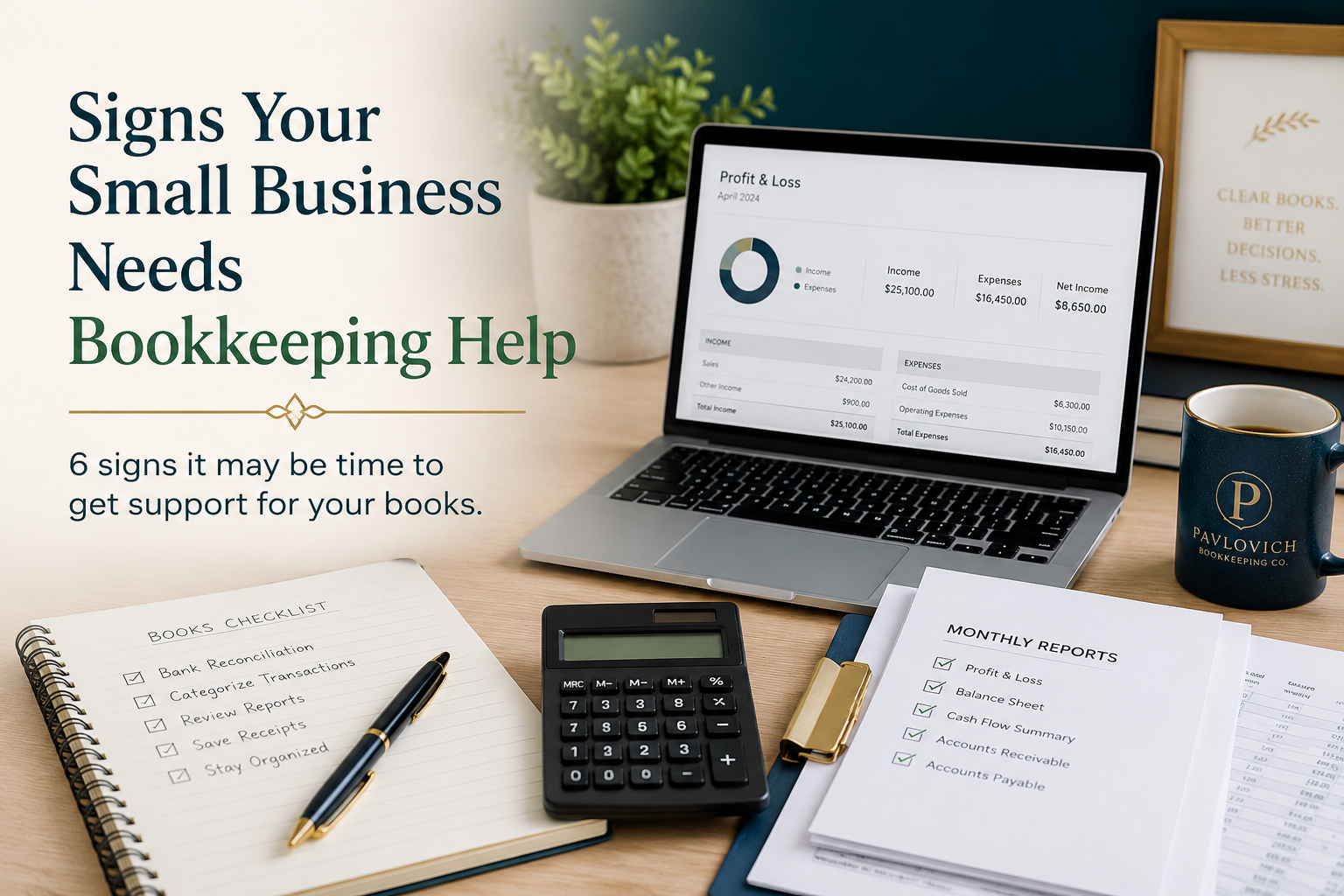
Bookkeeping is one of those tasks that can easily get pushed aside when business is busy.
Key Takeaways
- Small business bookkeeping help is essential when owners avoid looking at their numbers due to confusion or fear.
- If your books are months behind, catch-up bookkeeping can bring records current and help you stay organized.
- Categorizing transactions accurately is crucial; if you’re unsure, bookkeeping help can ensure your reports reflect the true financial picture.
- To ease tax season stress, keep organized books throughout the year for smoother preparation.
- Mixing personal and business expenses complicates bookkeeping; proper separation makes records cleaner and processes easier.
You are serving customers, answering emails, managing projects, sending invoices, paying bills, and handling the day-to-day work that keeps your business moving. Before long, bookkeeping becomes something you plan to “catch up on later.”
The problem is that later can turn into weeks or months. And when the books are behind, it becomes harder to know where your business stands.
Many small business owners start out handling their own bookkeeping. That can work for a while. But as the business grows, or as your time becomes more limited, DIY bookkeeping can start costing you clarity, confidence, and peace of mind.
Here are some signs it may be time to get bookkeeping help.
1. You Avoid Looking at Your Numbers
If you feel nervous, frustrated, or unsure every time you think about your books, that is a sign worth paying attention to.
Many business owners avoid looking at their numbers because they are afraid of what they might find. Maybe the reports do not seem accurate. Maybe QuickBooks feels confusing. Maybe you are not sure whether your income and expenses are being tracked correctly.
Avoiding the numbers does not mean you are careless. It usually means the system is not working for you.
Clean, organized books give you a clearer picture of your business. You should be able to look at your records and understand basic questions like:
- How much income came in this month?
- What were the main expenses?
- Are there any unusual transactions?
- Are the bank and credit card accounts reconciled?
- Are the reports reliable enough to review?
When your books are organized, your numbers feel less intimidating. They become useful information instead of one more source of stress.
2. Your Books Are Several Months Behind
Falling behind on bookkeeping is very common, especially for small business owners who are focused on customers, jobs, and daily operations.
One missed month can quickly turn into three. Then six. Then an entire year.
When books are behind, it becomes harder to remember what certain transactions were for. Receipts may be missing. Bank transfers may be unclear. Business and personal expenses may need to be sorted out. The longer bookkeeping waits, the more time it usually takes to clean up.
Catch-up bookkeeping can help bring your records current by reviewing past transactions, organizing accounts, and working through unclear items. Once the books are caught up, monthly bookkeeping can help keep them from falling behind again.
If your books are months behind, you do not need to feel embarrassed. You just need a clear starting point and a practical process to get organized.
3. You Are Not Sure If Transactions Are Categorized Correctly
Categorizing transactions is one of the most important parts of bookkeeping.
It may seem simple at first. A software subscription goes under software. Office supplies go under office expenses. A customer payment goes under income.
But not every transaction is obvious.
For example, a payment could be a loan payment, owner draw, contractor payment, equipment purchase, reimbursement, transfer, or something else entirely. If transactions are put in the wrong place, your reports may not show an accurate picture of your business.
This is especially common when business owners rely only on bank feeds or automatic rules in QuickBooks. Bank feeds are helpful, but they do not replace careful review and reconciliation.
If you often look at transactions and think, “I’m not sure where this goes,” bookkeeping help can make a big difference. A bookkeeper can help keep your records more consistent and organized so your reports are easier to understand.
4. Tax Season Feels Stressful Every Year
Tax season is much easier when your books are already organized.
If every year involves scrambling for receipts, searching through statements, fixing old transactions, or trying to pull together reports at the last minute, your bookkeeping process may need attention.
Clean books can help provide your CPA or tax preparer with more complete, organized information. That may include reports such as a profit and loss statement, balance sheet, and other records they request.
Bookkeeping does not replace the work of a CPA or tax preparer. But accurate, organized records can make tax-time preparation less stressful.
Instead of trying to clean up an entire year at once, monthly bookkeeping helps keep your records current throughout the year. That way, when tax season comes around, you are not starting from scratch.
5. You Do Not Review Monthly Reports
Monthly reports are only useful if they are accurate and reviewed regularly.
Many small business owners either do not have reports available or do not trust the reports they see. If the books are not reconciled, transactions are miscategorized, or accounts are incomplete, the reports may not be reliable.
A few basic reports can help you better understand your business, including:
- Profit and loss statement
- Balance sheet
- Accounts receivable, if you invoice customers
- Accounts payable, if you track unpaid bills
- Expense details by category
You do not need to become a financial expert to benefit from these reports. But you should have access to clear information about your business.
When bookkeeping is handled consistently, monthly reports can help you see trends, notice changes, and ask better questions. They give you a clearer view of where things stand.
6. Business and Personal Expenses Are Mixed Together
Mixing business and personal expenses is another common issue, especially for newer businesses or solopreneurs.
Maybe a business purchase was made on a personal card. Maybe a personal expense was paid from the business account. Maybe one account is being used for everything.
This can create confusion in the books and lead to more questions later. It may also make it harder to provide clean information to your CPA or tax preparer.
A bookkeeper can help identify mixed transactions, organize records, and keep categories more consistent. Going forward, it is usually helpful to use separate business bank and credit card accounts whenever possible.
Clear separation makes bookkeeping easier, reports cleaner, and tax-time records more organized.
Asking for Help Early Is Practical, Not a Failure
Many small business owners wait too long to ask for bookkeeping help because they feel like they should be able to handle it themselves.
But bookkeeping takes time, consistency, and attention to detail. If you are already managing the daily responsibilities of running a business, it makes sense to get support.
Asking for help does not mean you failed. It means you are taking your business records seriously.
Good bookkeeping helps you stay organized, understand your numbers, and reduce the stress that comes from guessing. Whether you need ongoing monthly bookkeeping or catch-up bookkeeping to get back on track, the goal is the same: clean, reliable books you can feel confident about.
Get Your Books Organized
If your books are behind, confusing, or taking too much time, Pavlovich Bookkeeping Co. can help.
We provide monthly bookkeeping, catch-up bookkeeping, QuickBooks setup and support, and clear financial reporting for small business owners who want organized records and reliable books.
Ready to get started?
Schedule a Consultation and take the next step toward getting your books organized.